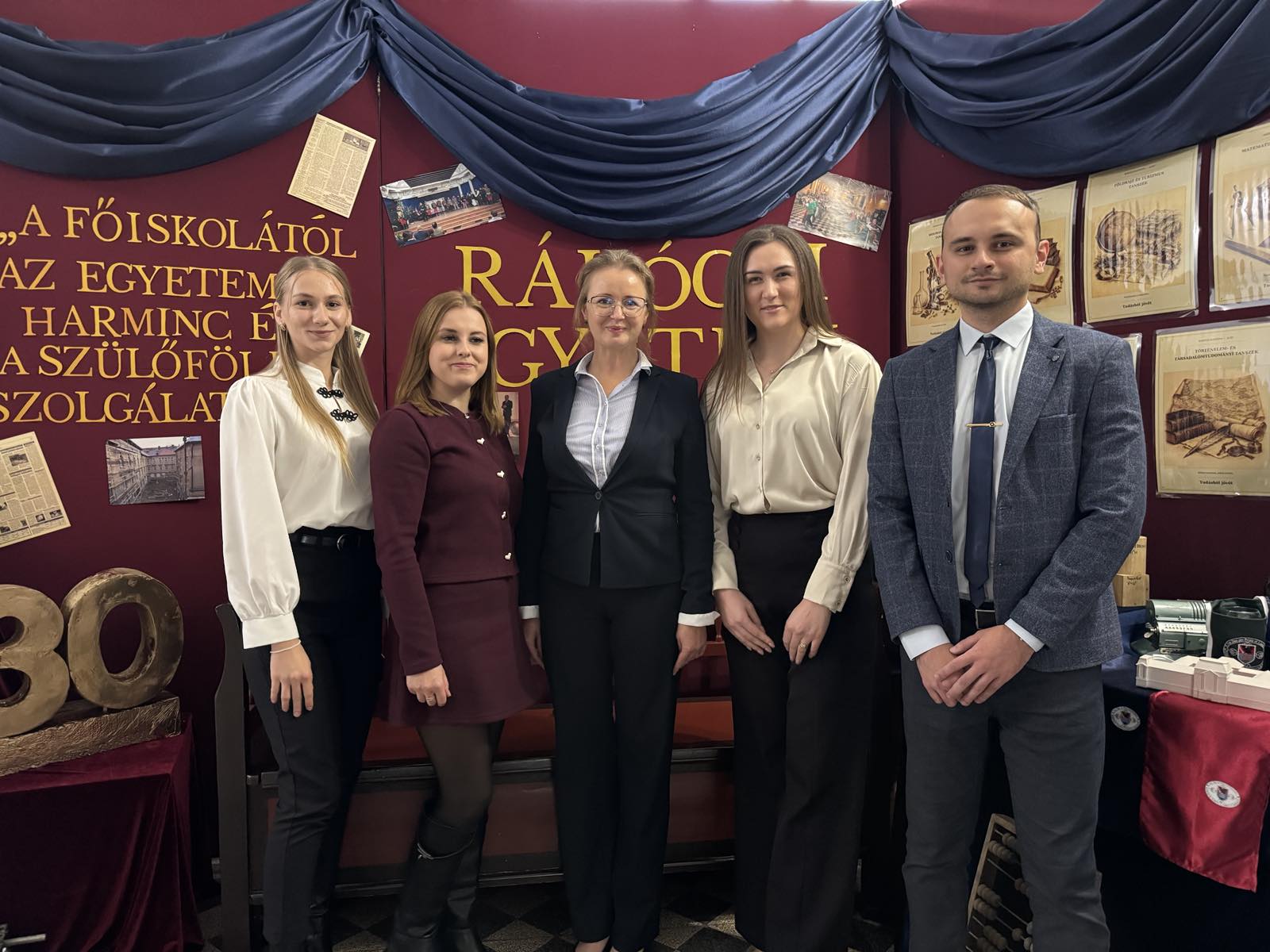
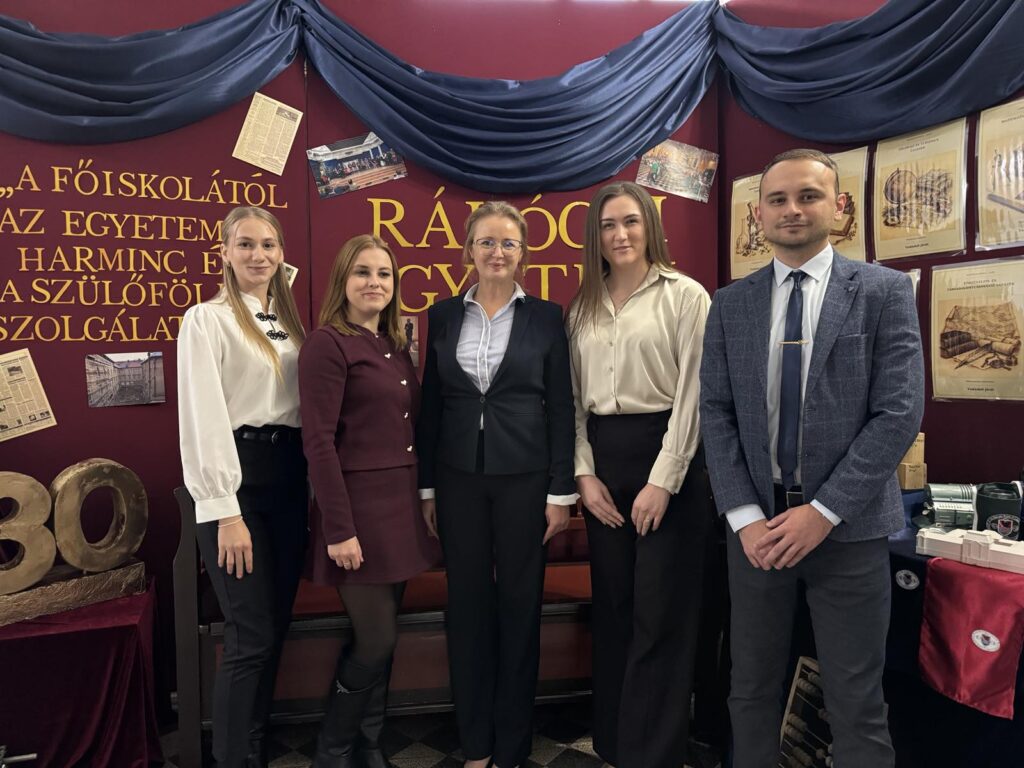
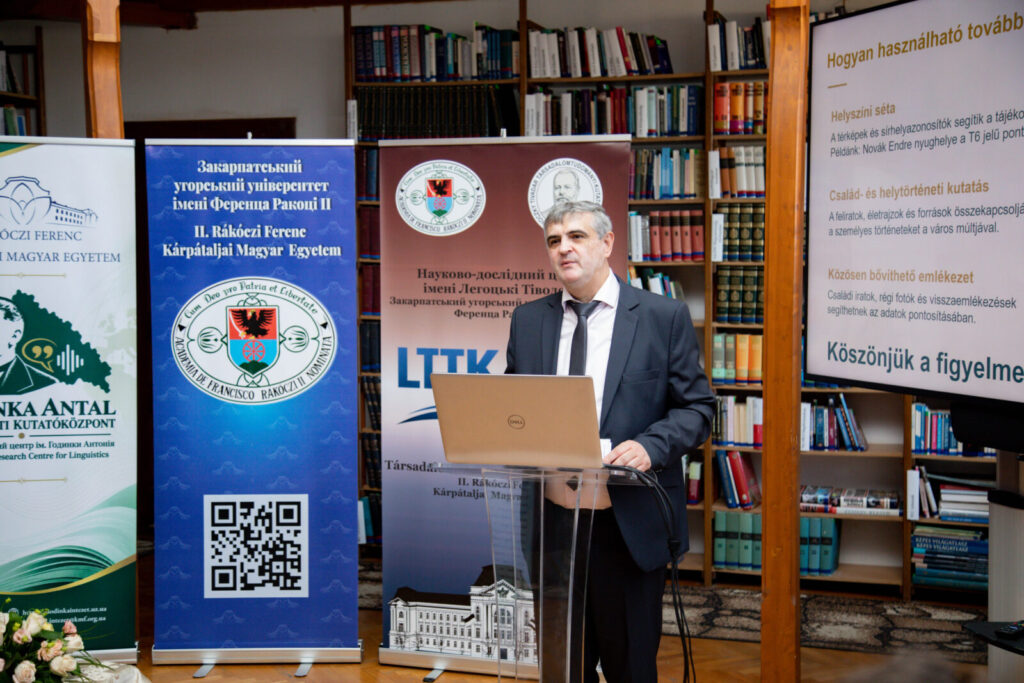
The Antal Hodinka Research Centrу for Linguistics and the Tivadar Lehoczky Research Centre for Social Sciences celebrated twenty-five years of scholarly work on 28 October 2026 at Ferenc Rákóczi II Transcarpathian Hungarian University. Held as part of the programme marking the University’s thirtieth anniversary, the event offered an opportunity to revisit the centres’ shared origins and review their achievements.
Both research centres grew out of the LIMES Social Research Institute. Their establishment as two independent research units was guided by the conviction of Kálmán Soós and István Csernicskó that higher education must be grounded in its own research and scholarly achievements. The centres provided an institutional framework for this work, enabling systematic research into issues affecting the Hungarian community in Transcarpathia, the publication of findings, and the development of new generations of researchers.
The establishment of the Hodinka Research Centre was closely connected to the development of the Termini Hungarian Language Research Network. Founded on the programme of “debordering” the Hungarian language, the network seeks to ensure that linguistic research encompasses the entire Hungarian-speaking community and that the distinctive language varieties used by Hungarian minority communities are represented in dictionaries, handbooks and scholarly descriptions. Alongside the Hodinka Research Centre, the network brings together the Szabó T. Attila Language Institute, the Gramma Language Office, the Imre Samu Language Institute, the Verbi Language Research Workshop and the Glotta Language Institute. The Hodinka Research Centre remains actively involved in joint research, lexicographical and terminological projects, and cooperation among Hungarian linguistic research institutions across the Carpathian Basin.
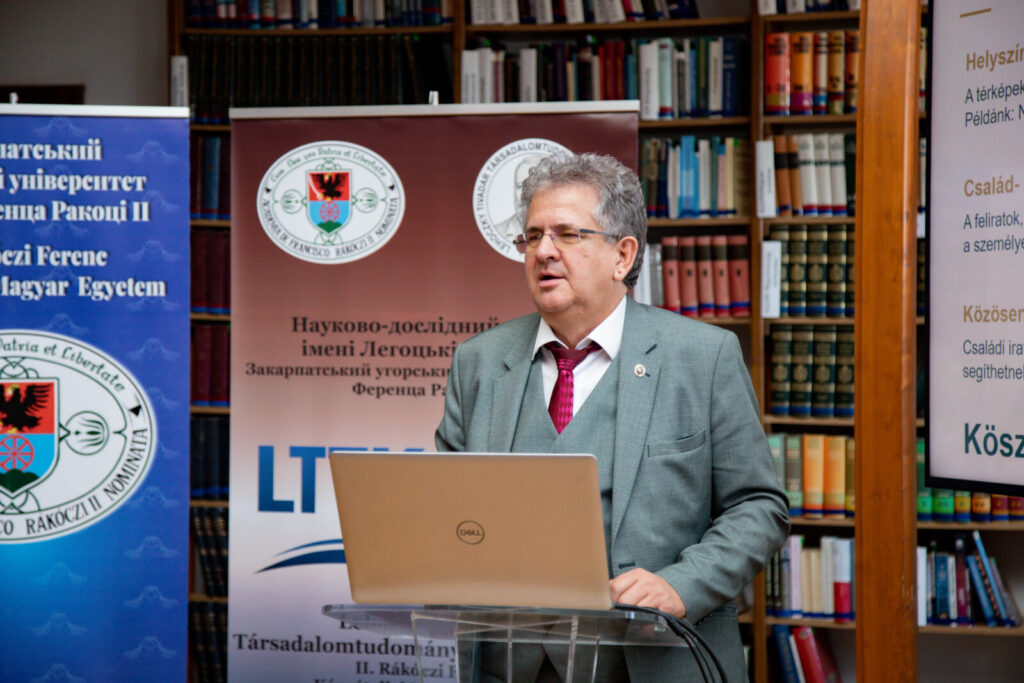
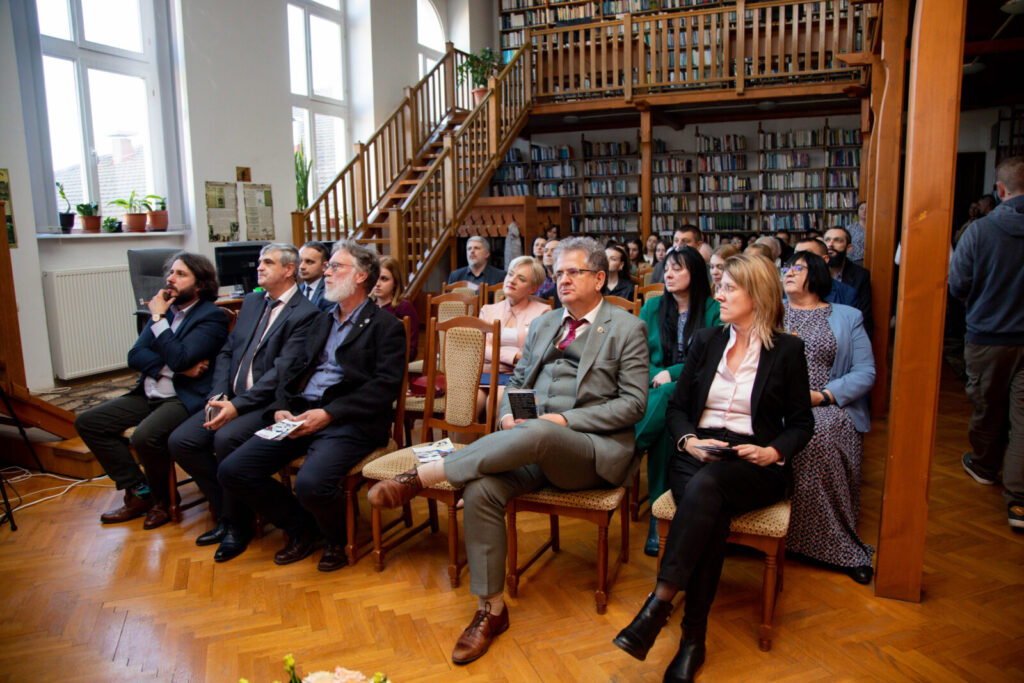
We were particularly honoured to welcome members of the delegation from the Hungarian Academy of Sciences: Balázs Borsos, Full Member and Vice-President for Social Sciences of the Academy; Károly Kocsis, Full Member of the Academy and Chair of its Presidential Committee on Hungarian Science Abroad; and Tünde Morvai, Head of the Secretariat of Hungarian Science Abroad and Secretary of the Presidential Committee on Hungarian Science Abroad. In his welcome address, Károly Kocsis praised the two centres’ contribution to Hungarian scholarship in Transcarpathia. Rector István Csernicskó and Vice-Rector Imre Szakál highlighted the centres’ role in the University’s development, its research achievements and the professional development of early-career researchers.
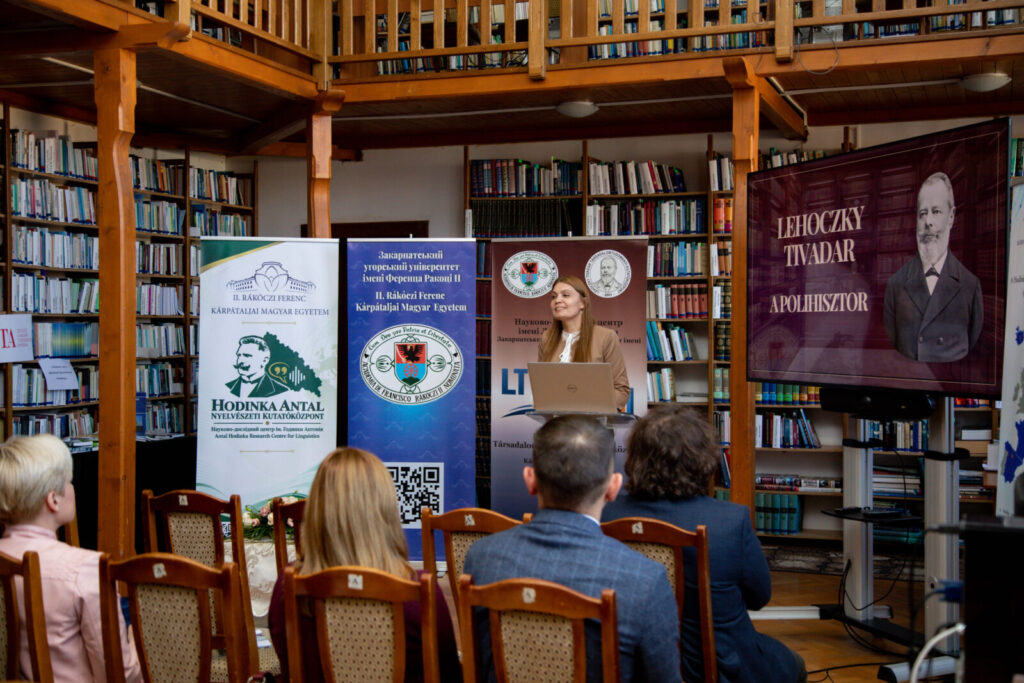
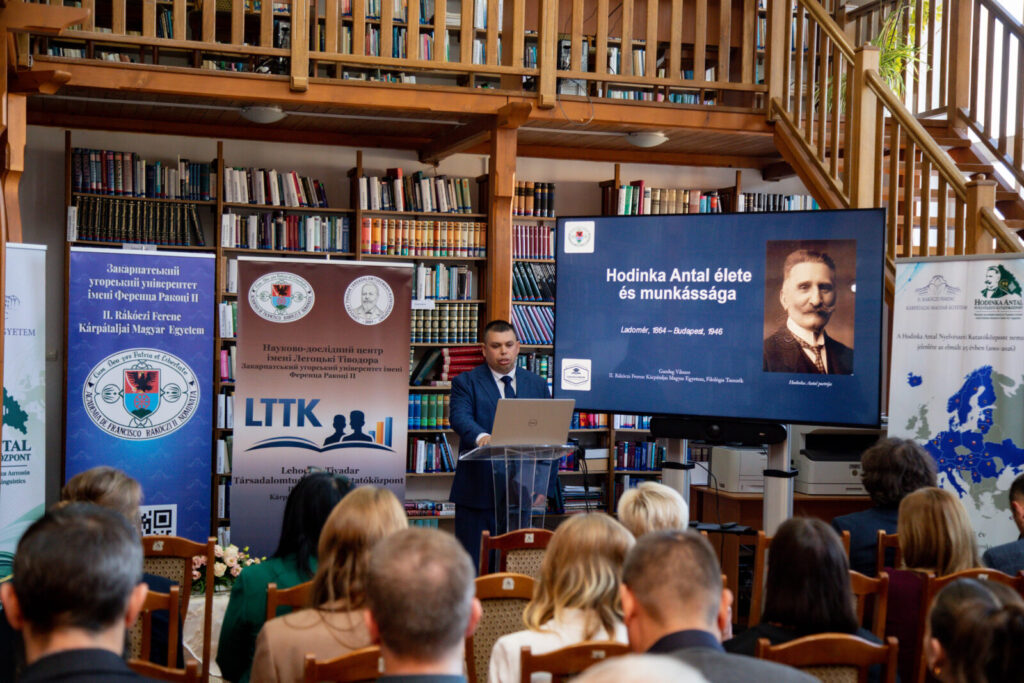
The programme continued with presentations on the scholarly legacies of the two centres’ namesakes. A joint presentation by Erzsébet Molnár D., György Csatáry and Béla Rácz explored the life and work of Tivadar Lehoczky, while Vilmos Gazdag presented the work of Antal Hodinka. Both scholars conducted wide-ranging research that advanced knowledge of the region’s history, communities and cultural heritage. The research centres bearing their names continue this multidisciplinary tradition, combining findings and methods from different fields to investigate linguistic and social processes in Transcarpathia.
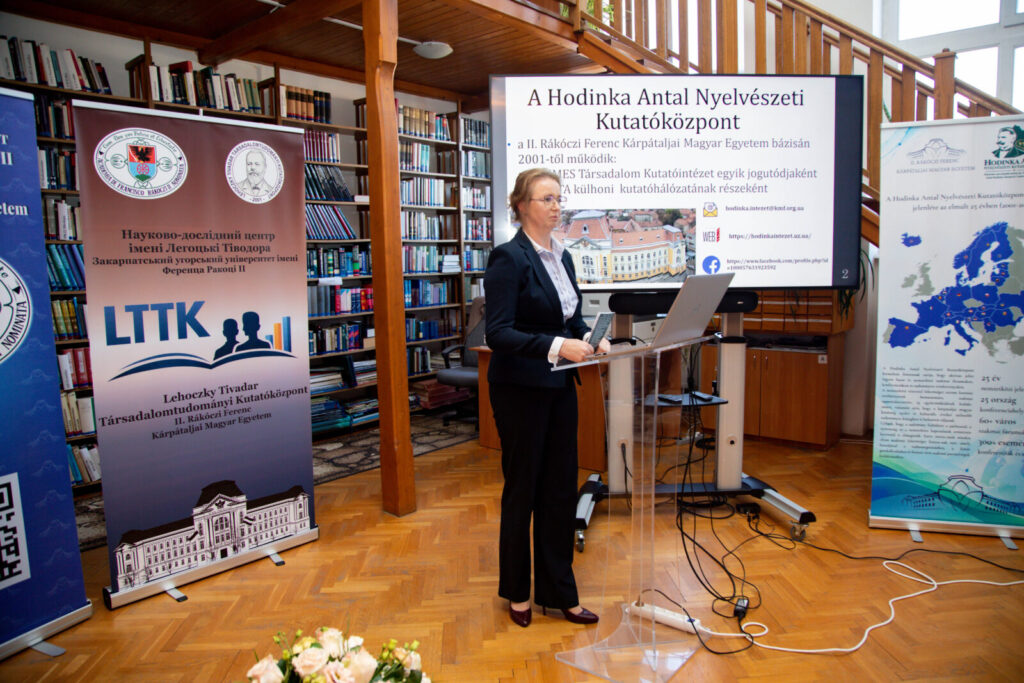
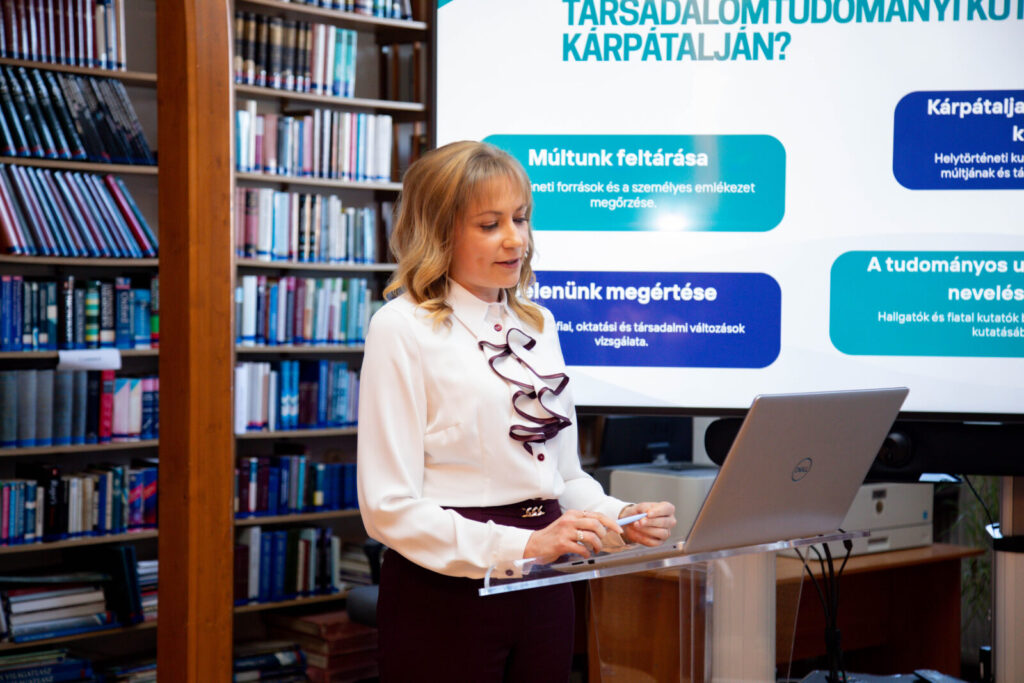
The centres’ achievements over the past twenty-five years were presented by their directors, Katalin Pallay and Kornélia Hires-László. The presentation on the Hodinka Research Centre highlighted research into Hungarian language use in Transcarpathia, multilingualism, education and language rights, alongside the practical benefits of this work for the community. The overview covered 31 research and development programmes and initiatives, while staff members’ professional activities extended to 64 localities in 24 countries and more than 300 events. In addition to books, academic papers and research reports, their work has produced dictionaries, databases and language-use guides. Alongside a growing number of publications in international journals, reaching academic audiences in both Hungary and Ukraine remains an important priority.
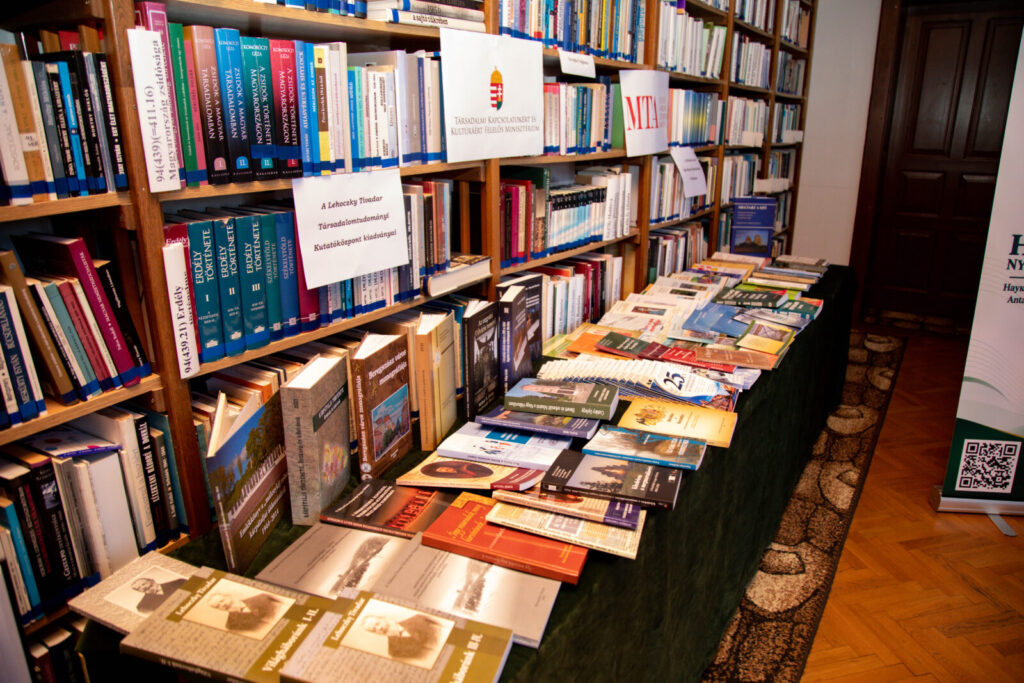
Although the two centres have distinct research profiles, their work intersects in many areas. Understanding the relationships between language use, education and social processes often requires cooperation across disciplines. One recent example is the competency assessment of Hungarian pupils in Transcarpathia, which demonstrated the value of combining research expertise and different disciplinary perspectives. Conducting a study of this scale, jointly analysing the data and publishing the findings in a collected volume represent tangible achievements of cooperation between the two centres.
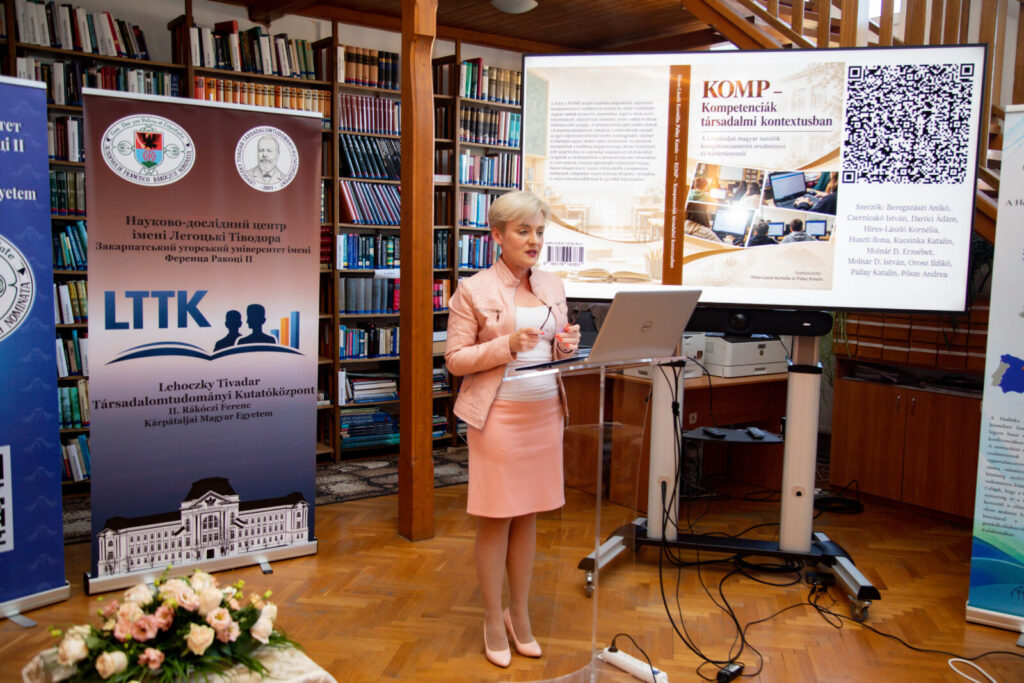
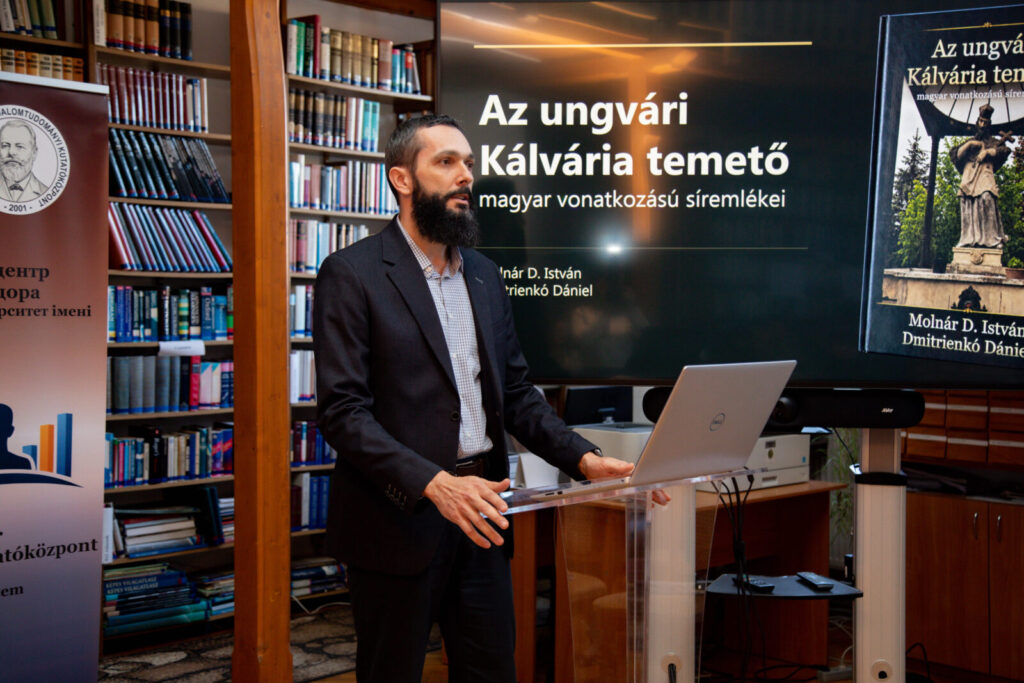
The event also featured the presentation of the centres’ latest publications. Anna Lehocki-Samardžić, Director of the Glotta Language Institute in Croatia and Associate Professor at Josip Juraj Strossmayer University of Osijek, presented the volume edited by Kornélia Hires-László and Katalin Pallay, KOMP – Competencies in Social Context: Competency Assessment Results and Background Factors among Hungarian Pupils in Transcarpathia. The volume examines pupil performance in relation to family, school and settlement-level background factors, contributing to a better understanding of Hungarian-language education in Transcarpathia and identifying opportunities for its development. This was followed by the presentation of Grave Monuments Associated with Hungarians in Uzhhorod’s Calvary Cemetery, edited by István Molnár D. and Dániel Dmitrienkó.
Supporting the next generation of researchers has been a central task of both centres since their foundation. By involving students and early-career researchers, they seek to build a scholarly community that enables the transfer of research experience, the development of independent research skills and the beginning of academic careers. Their goal remains to ensure that future generations can draw on the expertise of well-prepared university teachers and researchers committed to the local community, while making their own contributions to Hungarian scholarship in Transcarpathia.
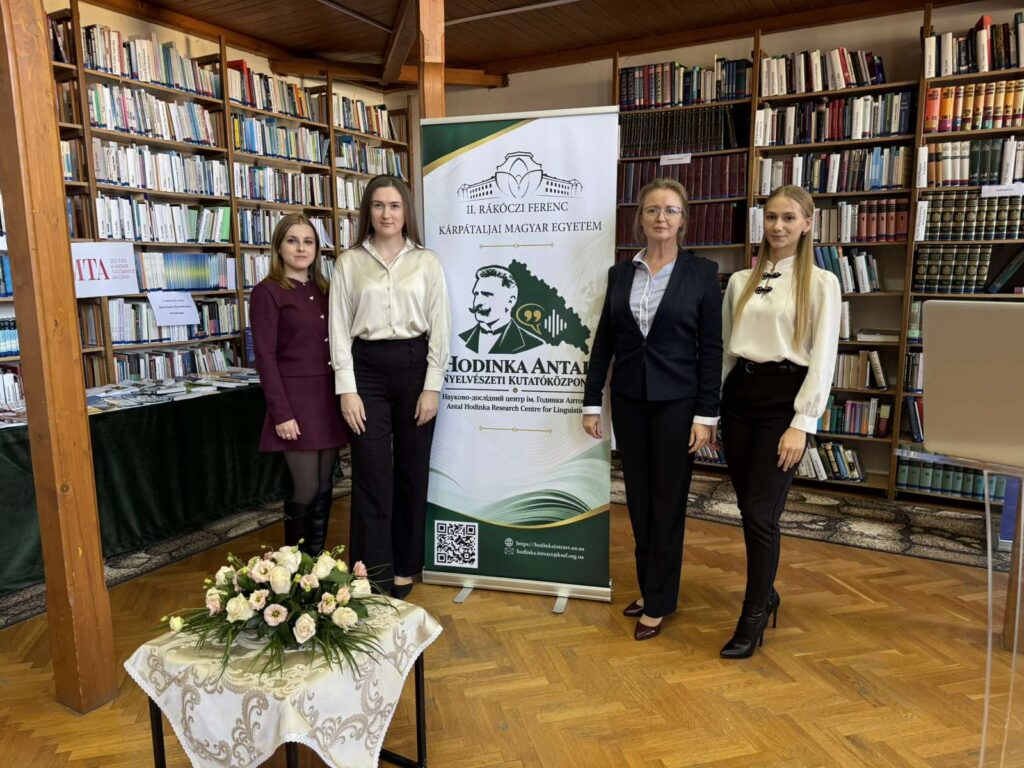
The joint anniversary celebration also provided an opportunity to thank our former and current colleagues, research participants, partners and supporters. Their contributions have made the achievements of the past twenty-five years possible and provide a shared foundation for future research.