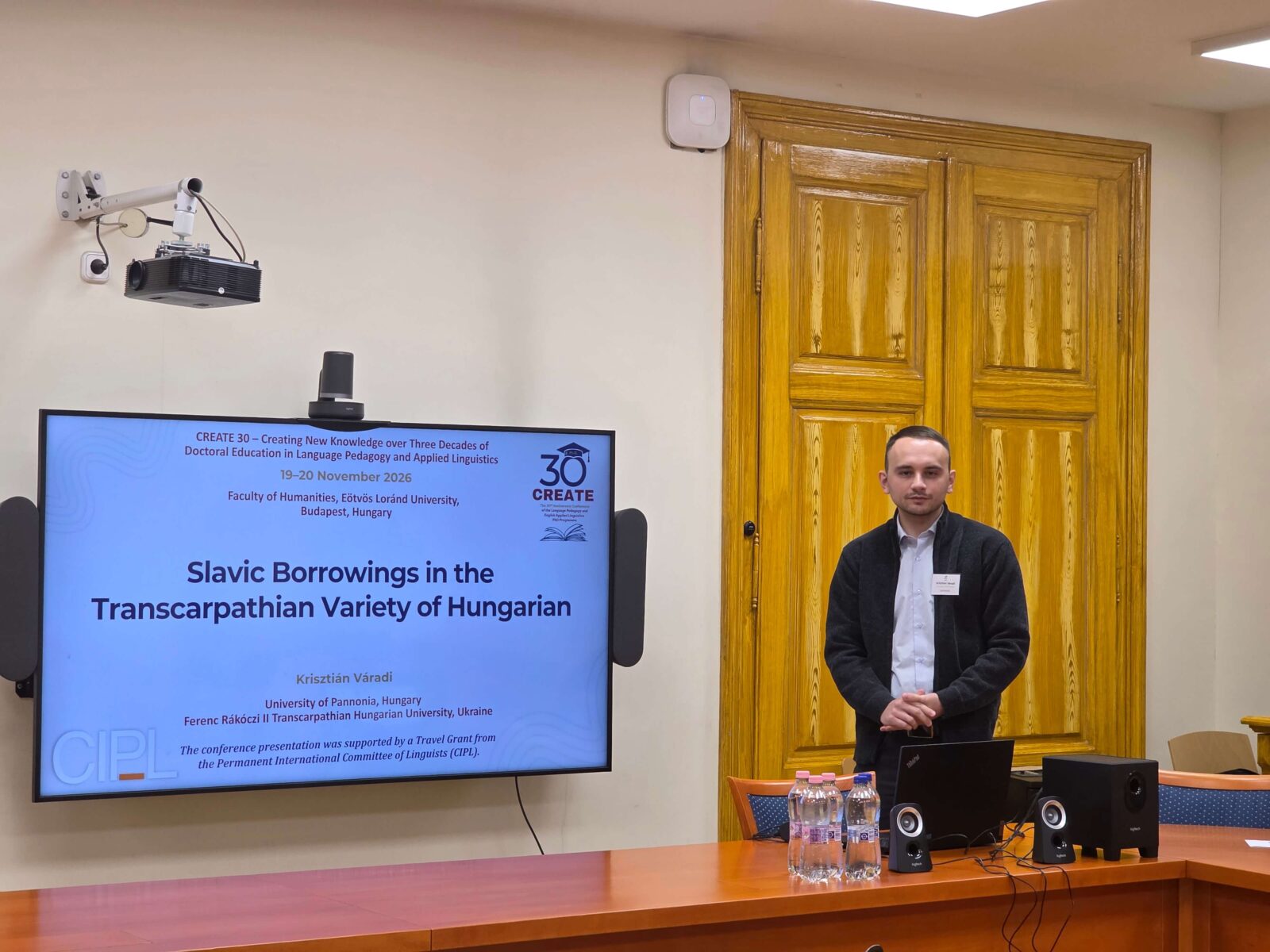
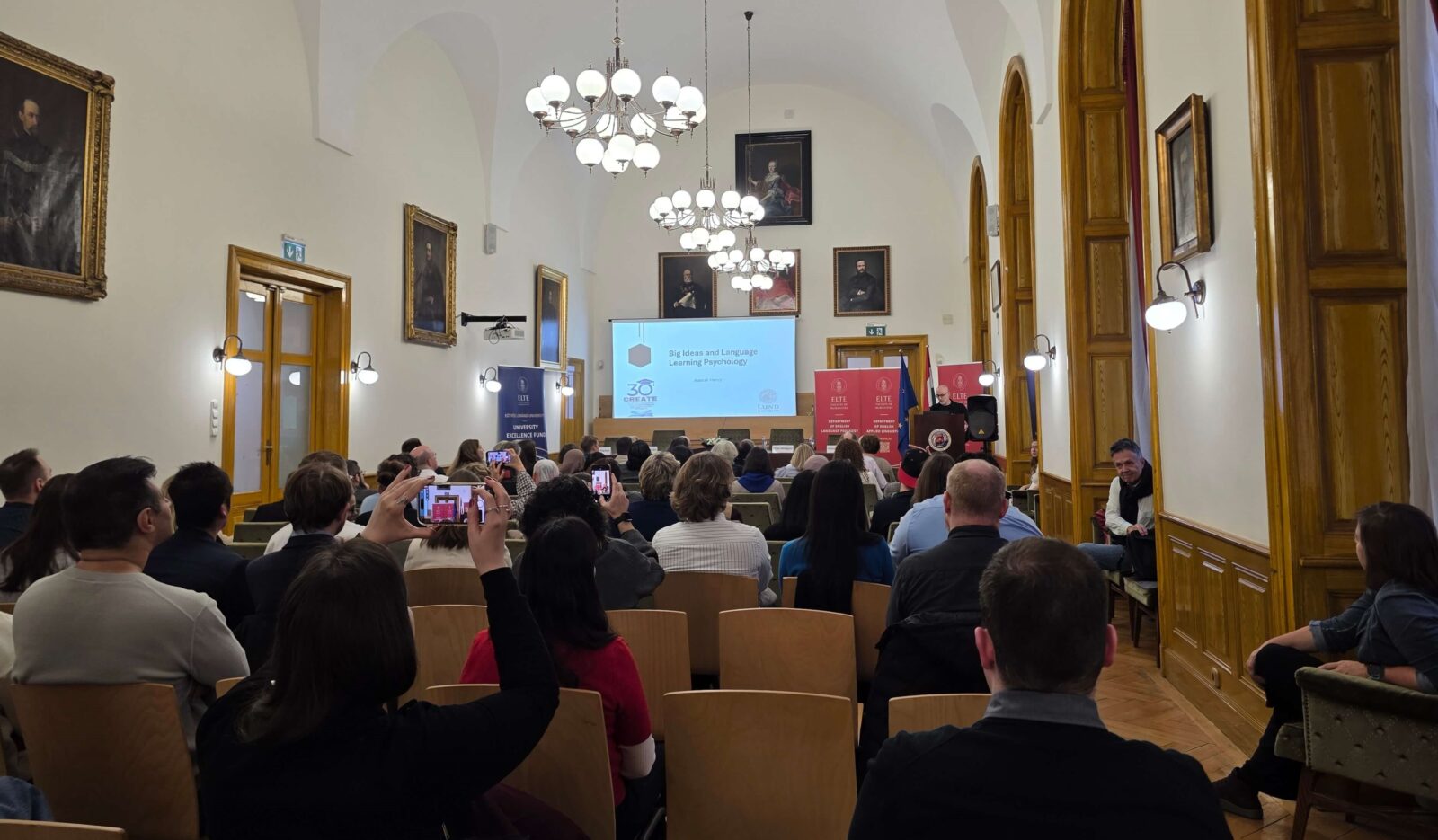
Krisztián Váradi, a researcher at the Antal Hodinka Research Centre for Linguistics and a senior lecturer at the Department of Philology of Ferenc Rákóczi II Transcarpathian Hungarian University, delivered a presentation at the international conference CREATE 30 – Creating New Knowledge Over Three Decades of Doctoral Education in Language Pedagogy and Applied Linguistics, hosted by Eötvös Loránd University (ELTE) in Budapest on 19–20 November 2026.
The conference was organised to celebrate the 30th anniversary of the establishment of the Language Pedagogy and English Applied Linguistics PhD Programme at the Faculty of Humanities of ELTE, as part of the Hungarian Science Festival 2026, organised by the Hungarian Academy of Sciences. The large-scale international academic event featured six plenary talks, over one hundred paper presentations, as well as symposia and roundtable discussions. The conference aimed to showcase the latest research findings in applied linguistics, language pedagogy, multilingualism, sociolinguistics, and translation studies, introduce innovative theoretical and methodological approaches, and promote national and international academic collaboration.
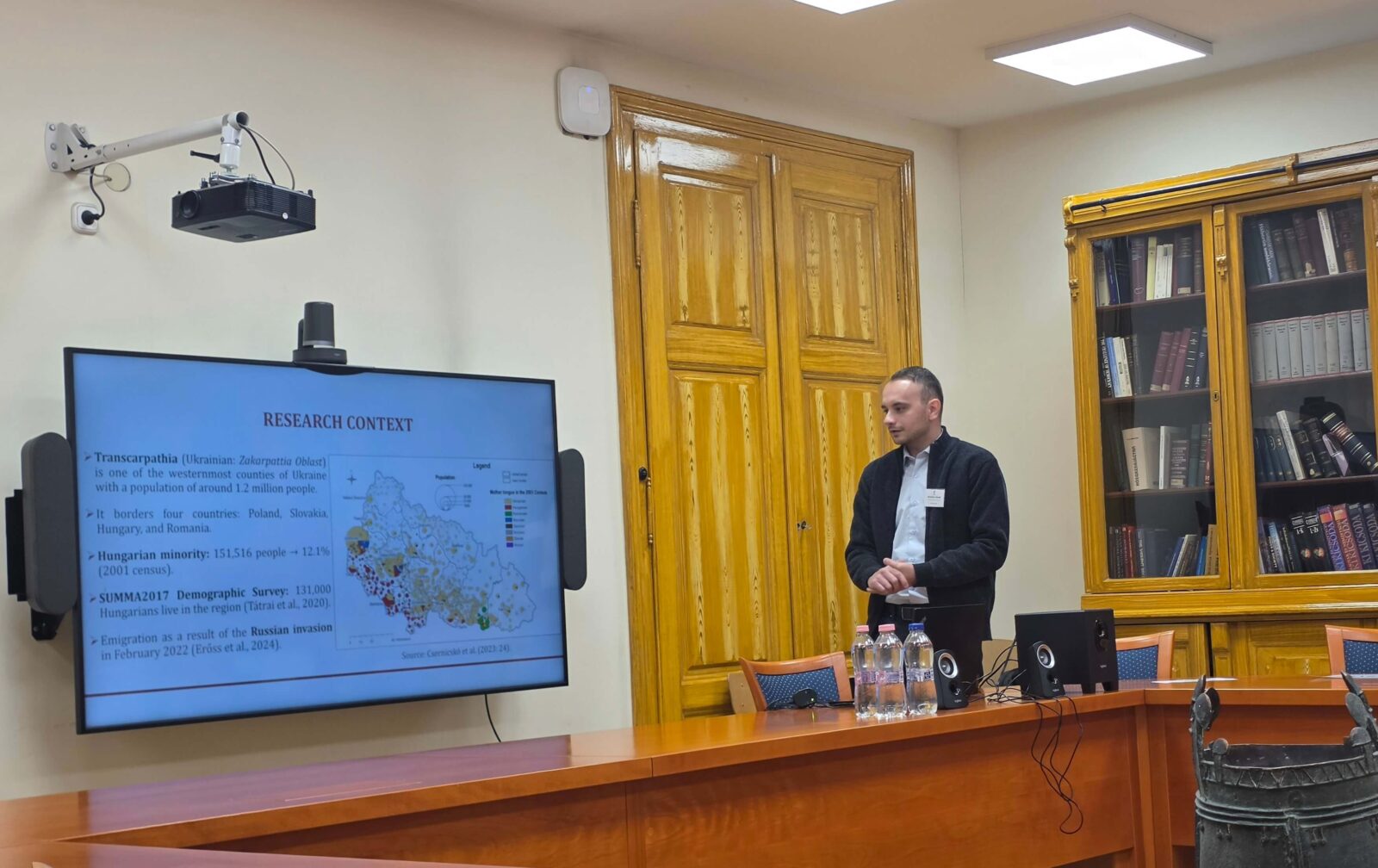
On 19 November, Krisztián Váradi delivered his English-language presentation entitled Slavic Borrowings in the Transcarpathian Variety of Hungarian in the session Lexical and Grammatical Variation Across Languages. Drawing on a database of 1,641 Slavic lexical borrowings compiled by the researcher, the presentation introduced a comprehensive typology of Ukrainian- and Russian-origin borrowings in the Transcarpathian variety of Hungarian. The analysis addressed the etymological, chronological, grammatical, and semantic characteristics of these borrowings, their phonological, morphological, and semantic integration, as well as their variant forms and occurrence across different domains of language use.
Particular attention was devoted to the linguistic legacy of the Soviet period, the growing role of the Ukrainian language, and the impact of recent social and political changes on the vocabulary of the Transcarpathian Hungarian community. The research findings contribute to a deeper understanding of Hungarian–Slavic language contact and to the documentation of the linguistic characteristics of the Hungarian minority in Transcarpathia.
The conference’s Book of Abstracts, which includes the abstract of our researcher’s presentation (pp. 147–148), is available at: https://doi.org/10.21862/CREATE-30/Book-of-Abstracts.
Krisztián Váradi’s participation in the conference was supported by a Travel Grant from the Permanent International Committee of Linguists (CIPL).