
The 25th Kölcsey Summer Academy for Teachers was held from 10 to 13 August 2026. Alongside a wide range of professional lectures and practical sessions, particular attention was devoted to the situation of Hungarian education in Transcarpathia and to the presentation of the latest results of the competency assessments conducted within the framework of the KOMP project.
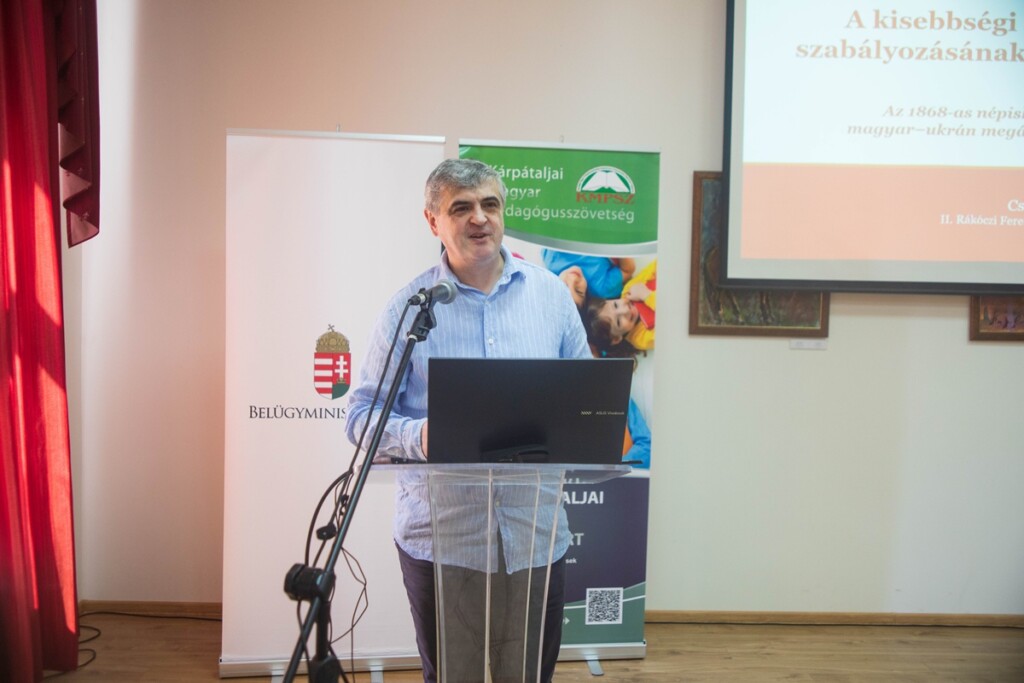
In his presentation, István Csernicskó, Rector of Ferenc Rákóczi II Transcarpathian Hungarian University, provided a historical overview of the development of the legal regulation of minority-language education in Transcarpathia. He also presented a typological framework through which the situation of Hungarian minority education in Transcarpathia can be interpreted in relation to the principles set out in international documents and the practices of other countries.
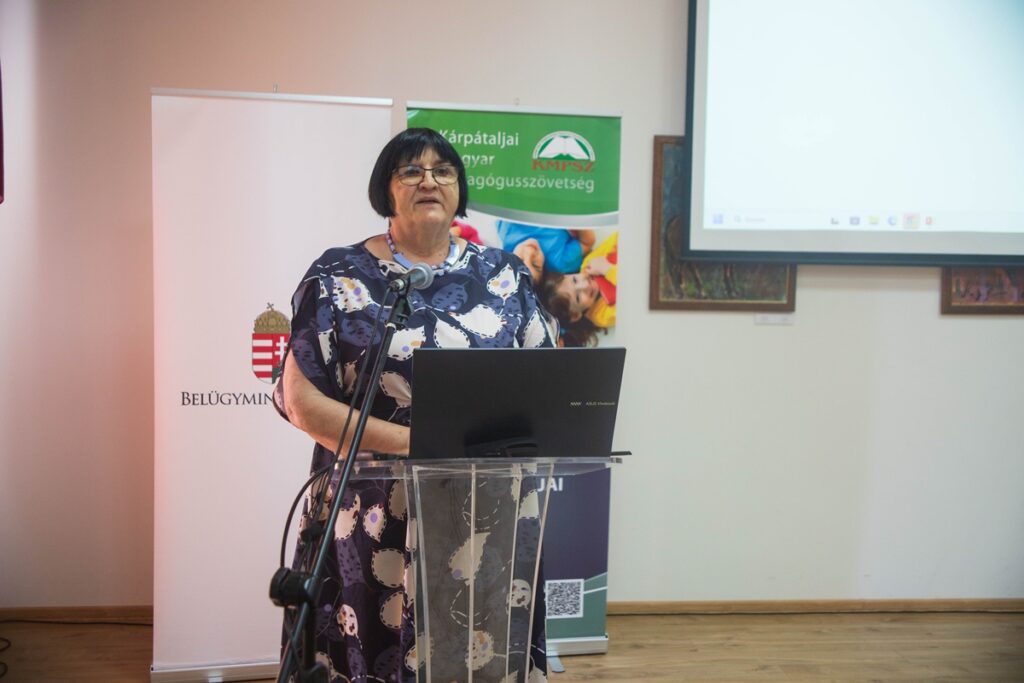
Ildikó Orosz, President of Ferenc Rákóczi II Transcarpathian Hungarian University, discussed the most significant changes in Hungarian education in Transcarpathia over the past decade and its current situation, with particular emphasis on the Ukrainian–Hungarian minority agreement and its expected implications for education.
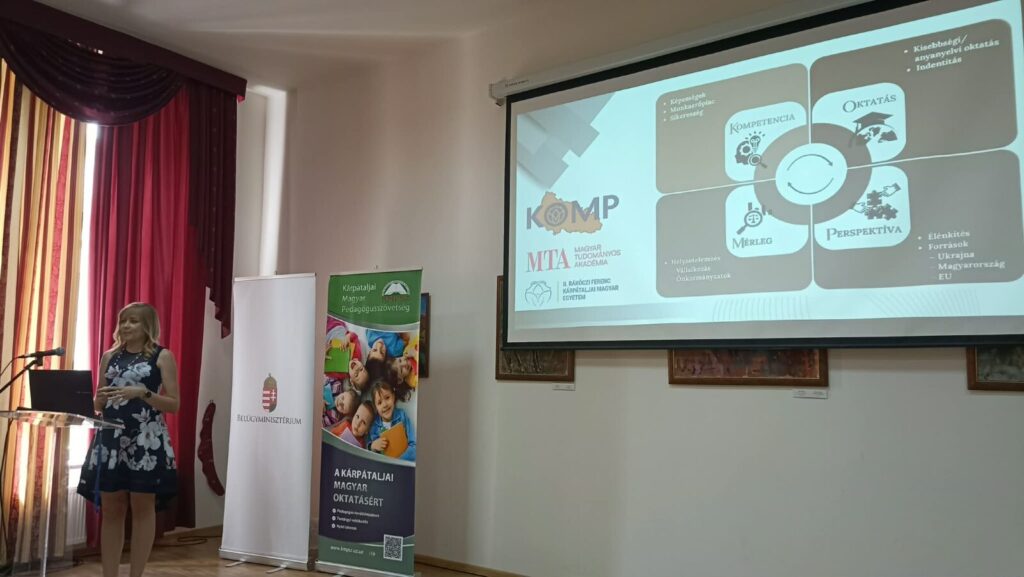
Katalin Pallay, Head of the Tivadar Lehoczky Research Centre for Social Sciences, and Kornélia Hires-László, Head of the Antal Hodinka Research Centre for Linguistics, presented the results of the KOMP project’s competency assessments in two lectures. First, they introduced the preliminary findings of the assessment conducted in 2025, addressing students’ proficiency levels, differences between the assessed domains, and the emerging trends. This was followed by a comprehensive analysis of the 2024 competency assessment, examining how academic, family, linguistic, material-cultural, and school-related background factors are associated with students’ performance in mathematics, reading comprehension in their mother tongue, English, and Ukrainian.
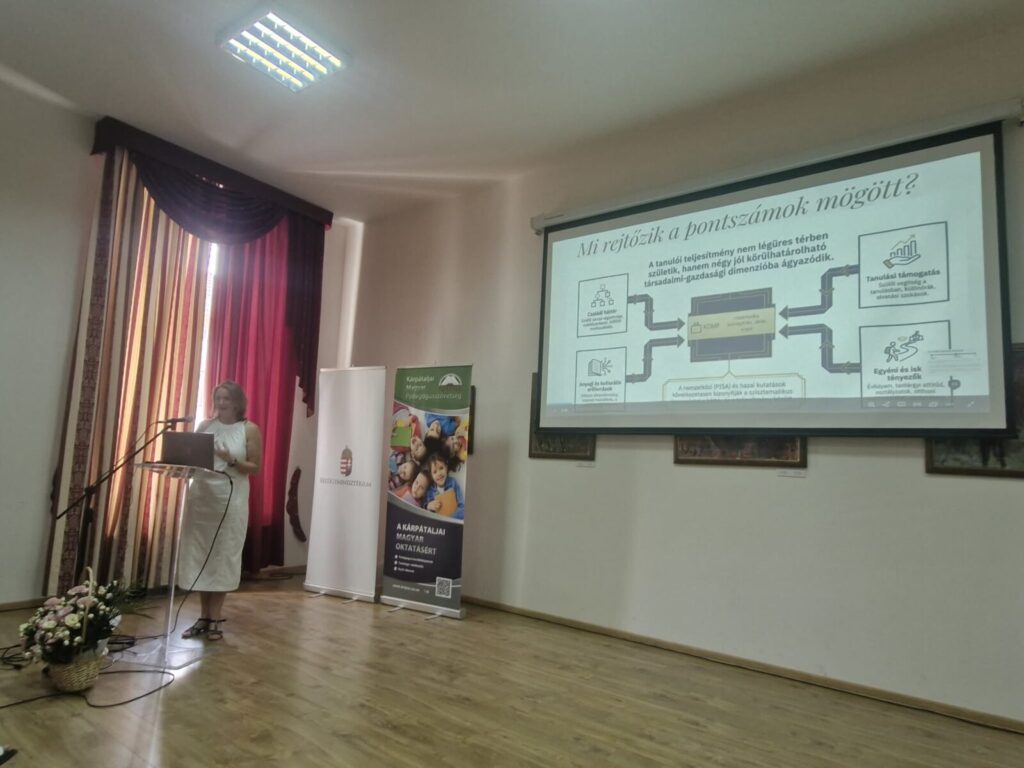
The findings indicate that student performance is socially embedded: the scores reflect differences in family circumstances, learning opportunities, linguistic characteristics, and educational pathways. However, the influence of these background factors varies across the assessed domains, making further detailed analysis of the results necessary.
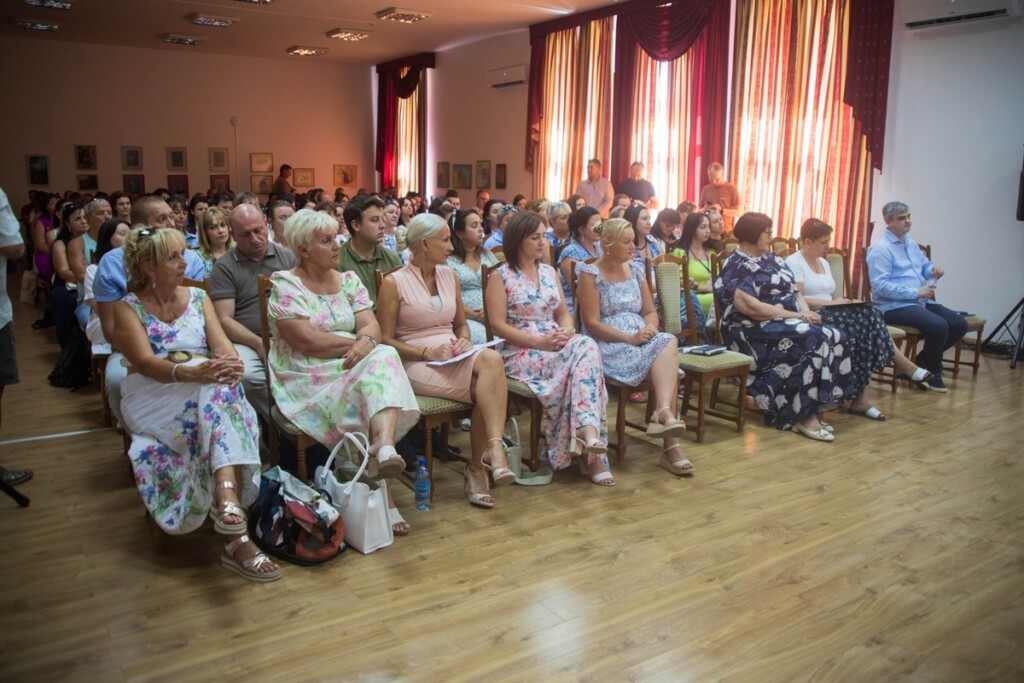
The symposia of the Kölcsey Summer Academy for Teachers constitute a particularly important professional forum for the KOMP project. They provide an opportunity for the results of the competency assessments and the most important information concerning the situation of Hungarian education in Transcarpathia to reach teachers directly. In this way, education professionals can learn first-hand about the research findings and their key pedagogical, institutional, and educational policy implications.
The competency assessments are conducted within the framework of the KOMP project, with the support of the National Research Programme of the Hungarian Academy of Sciences.