
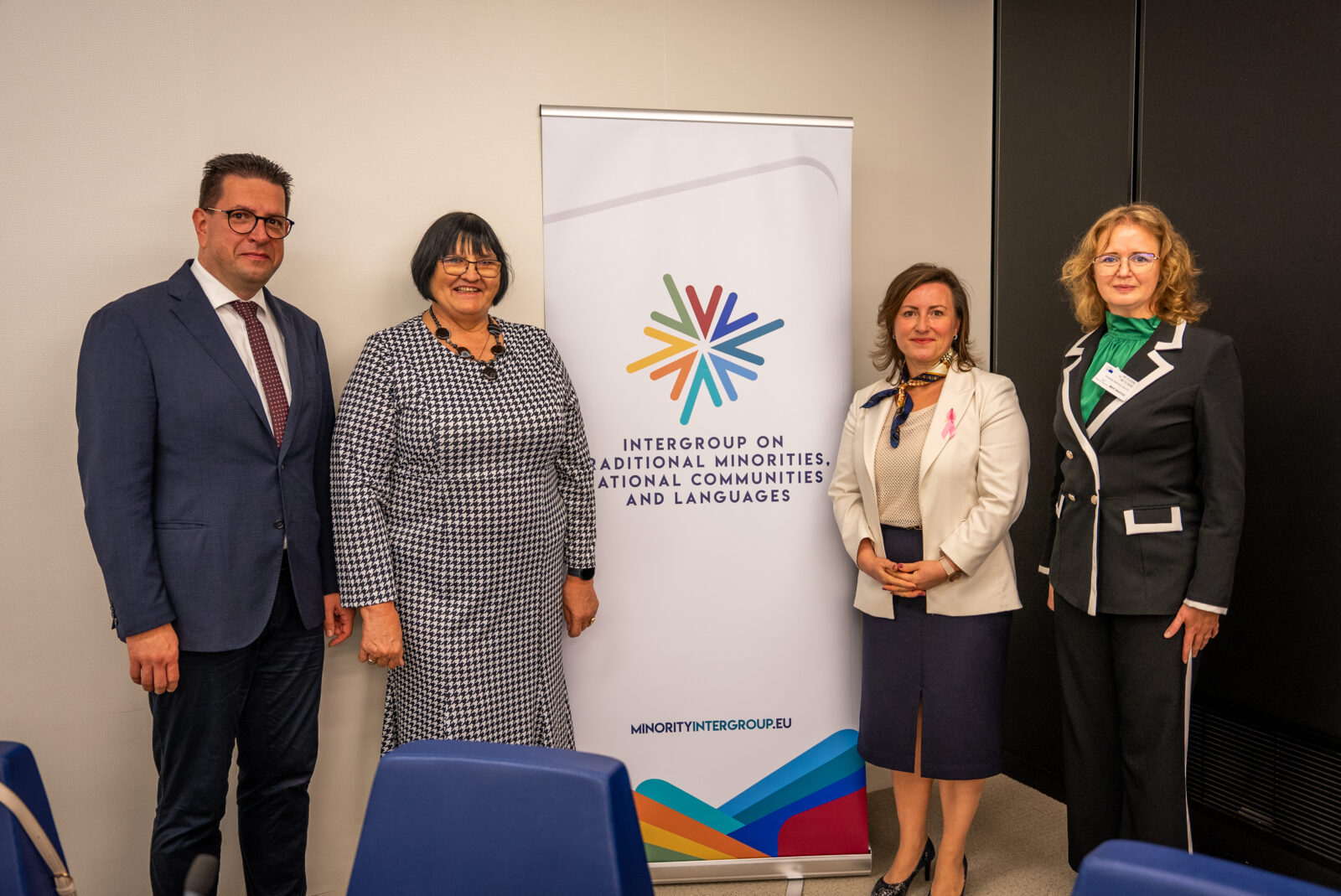
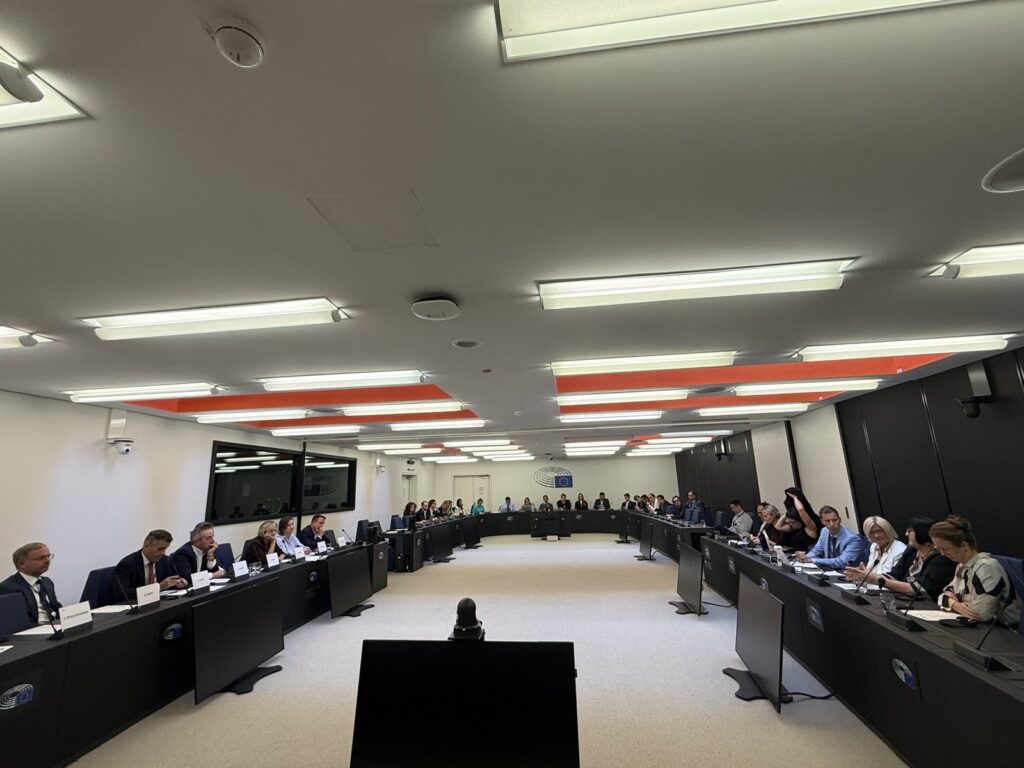
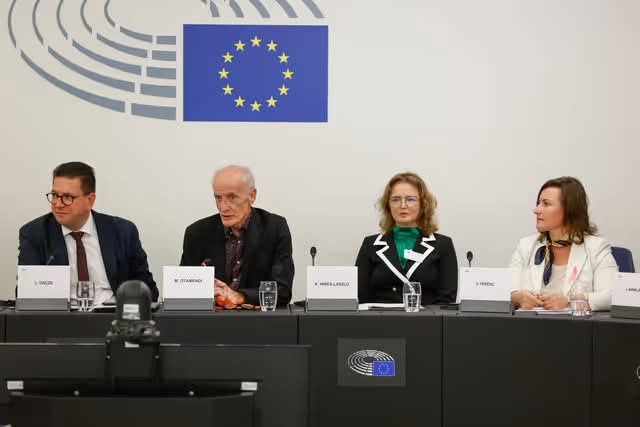
Research on minority language use and the practical initiatives informed by its findings took centre stage at the European Parliament presentation of the Language APL – Cross-border Language Accessibility in Public Life project. Implemented through cooperation among Hungarian, Ukrainian and Romanian partners, under the professional coordination of the Hodinka Antal Linguistic Research Centre, the project’s results were presented by Kornélia Hires-László, Head of the Research Centre, and Ildikó Orosz, President of Ferenc Rákóczi II Transcarpathian Hungarian University, at the European Parliament’s Minority Intergroup meeting in Strasbourg on 8 October 2026.
Supported by the Interreg programme (HUSKROUA/23/S/3.1/011), the project examined the opportunities and barriers associated with minority language use in everyday life. Sociological research conducted in the three countries explored how local communities experience multilingualism, what difficulties they encounter when exercising their language rights, and how access to public life and public services in their mother tongue can be improved.
The presentation highlighted the importance of connecting scientific research with practical initiatives, as well as the role of local institutions and civil society organisations in supporting minority language use. One of its key messages was that multilingualism can serve as a social, cultural and economic resource for communities across the region. The European Parliament forum provided an opportunity to bring the research findings and the solutions developed from them into policy discussions on minority rights.
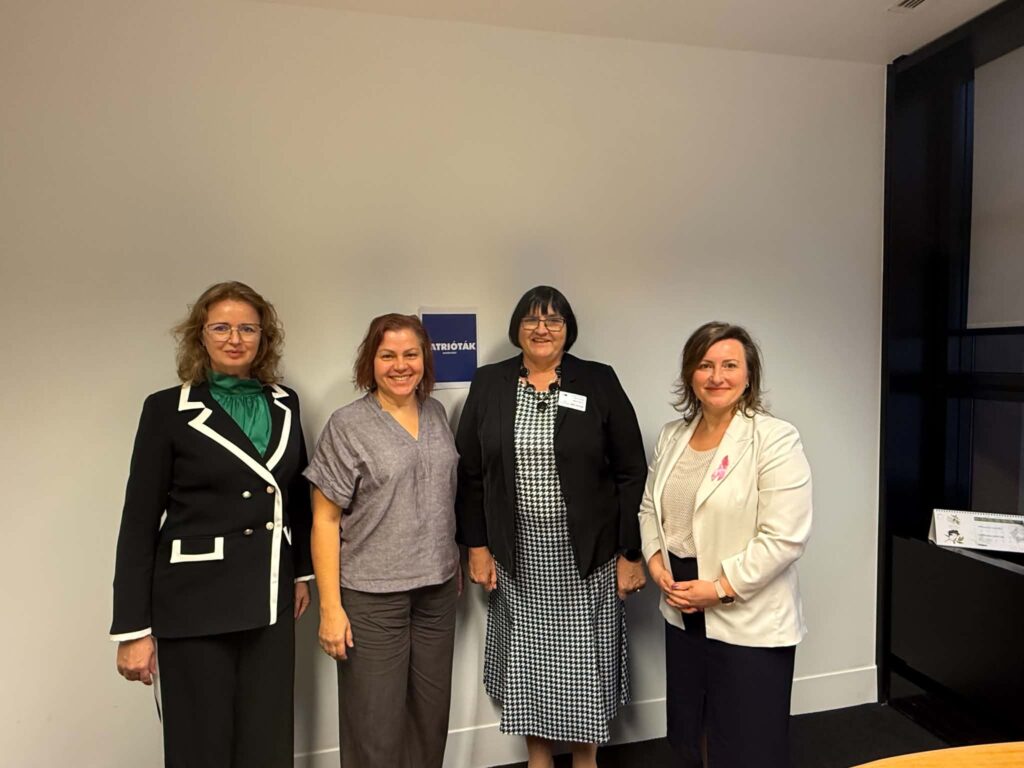
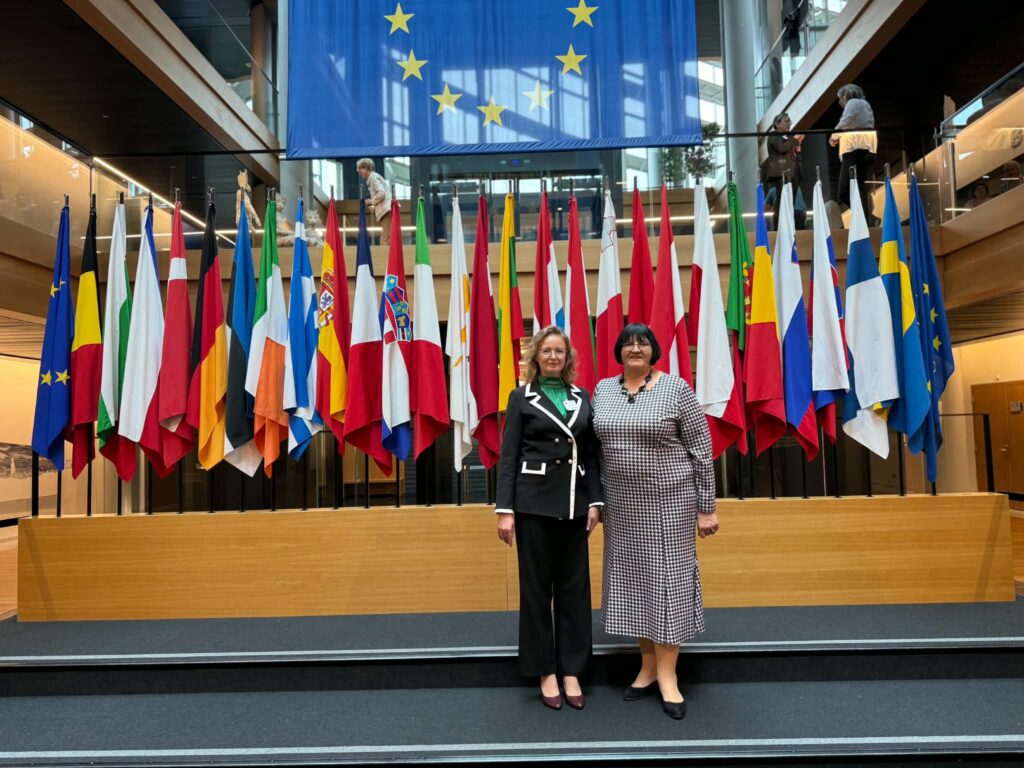
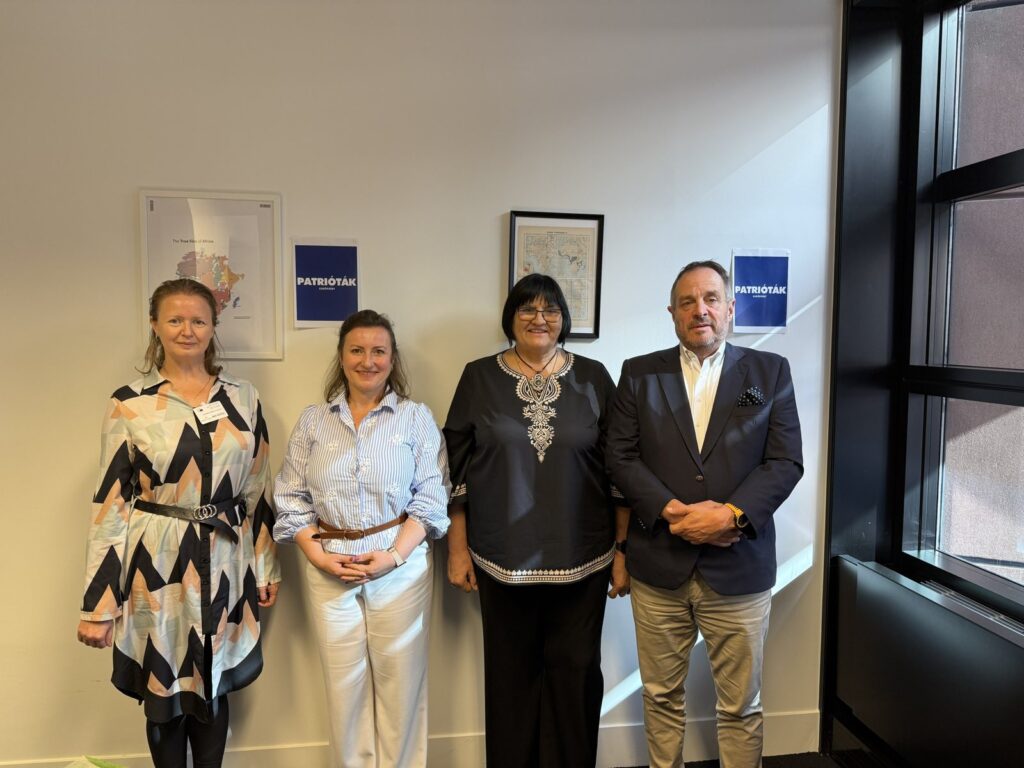
Alongside the project presentation, Ildikó Orosz and Kornélia Hires-László attended several meetings as representatives of Rákóczi University during their visit on 6–8 October, at the invitation of Viktória Ferenc. They met with Members of the European Parliament Viktória Ferenc, György Hölvényi, Eszter Lakos, Zsuzsanna Borvendég, Kinga Gál and Annamária Vicsek, and also attended a meeting of the Fidesz–KDNP delegation. During these discussions, they provided information on the situation of the Hungarian community in Transcarpathia, the challenges facing educational institutions operating under wartime conditions, and the practical implementation of minority and language rights.
The Hodinka Antal Linguistic Research Centre extends its special thanks to MEP Viktória Ferenc for the invitation and for initiating the project’s presentation, as well as for her continued support in bringing research findings from Transcarpathia to international audiences and into policy dialogue.