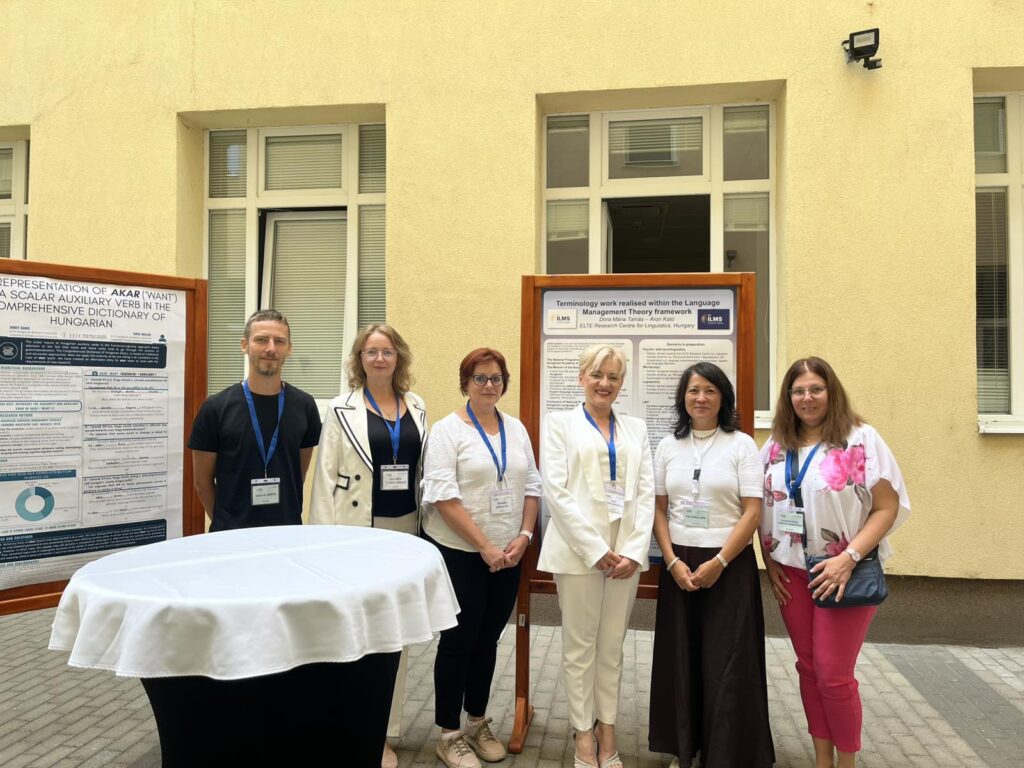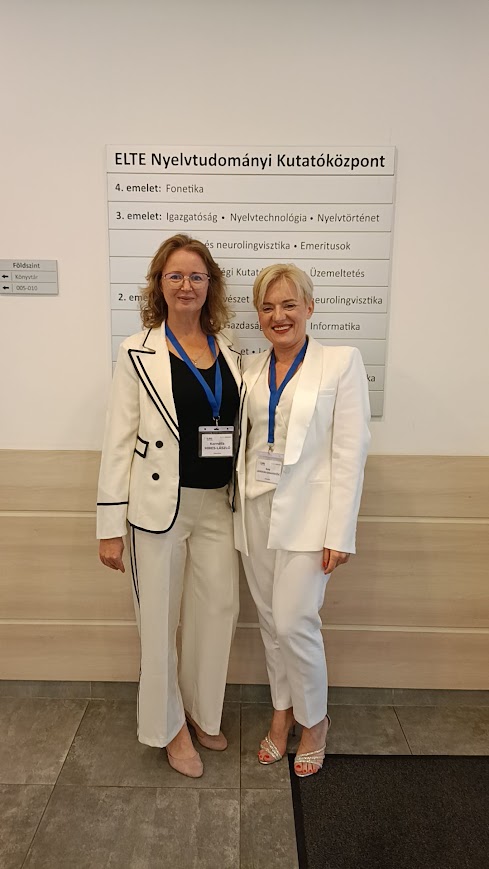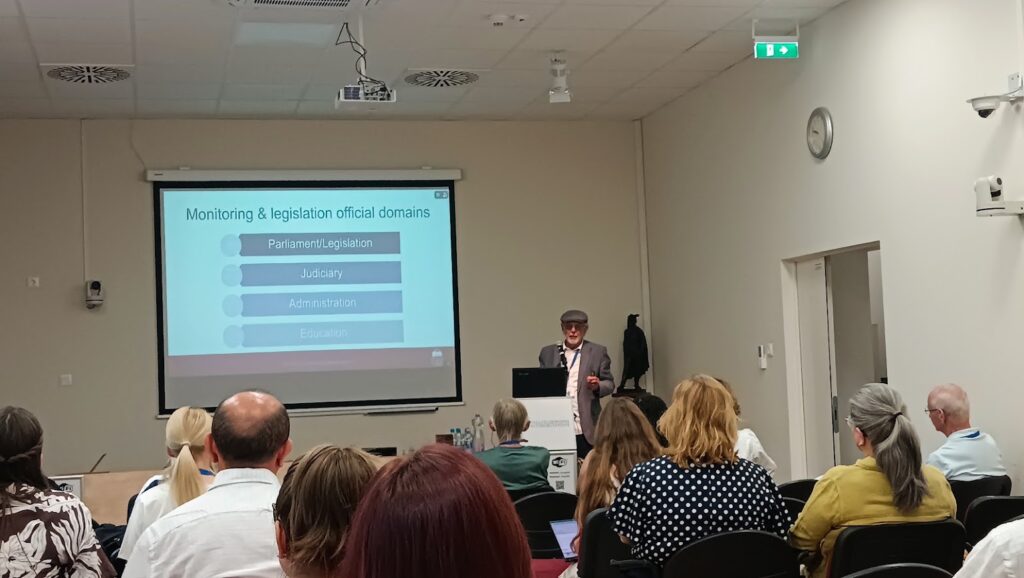
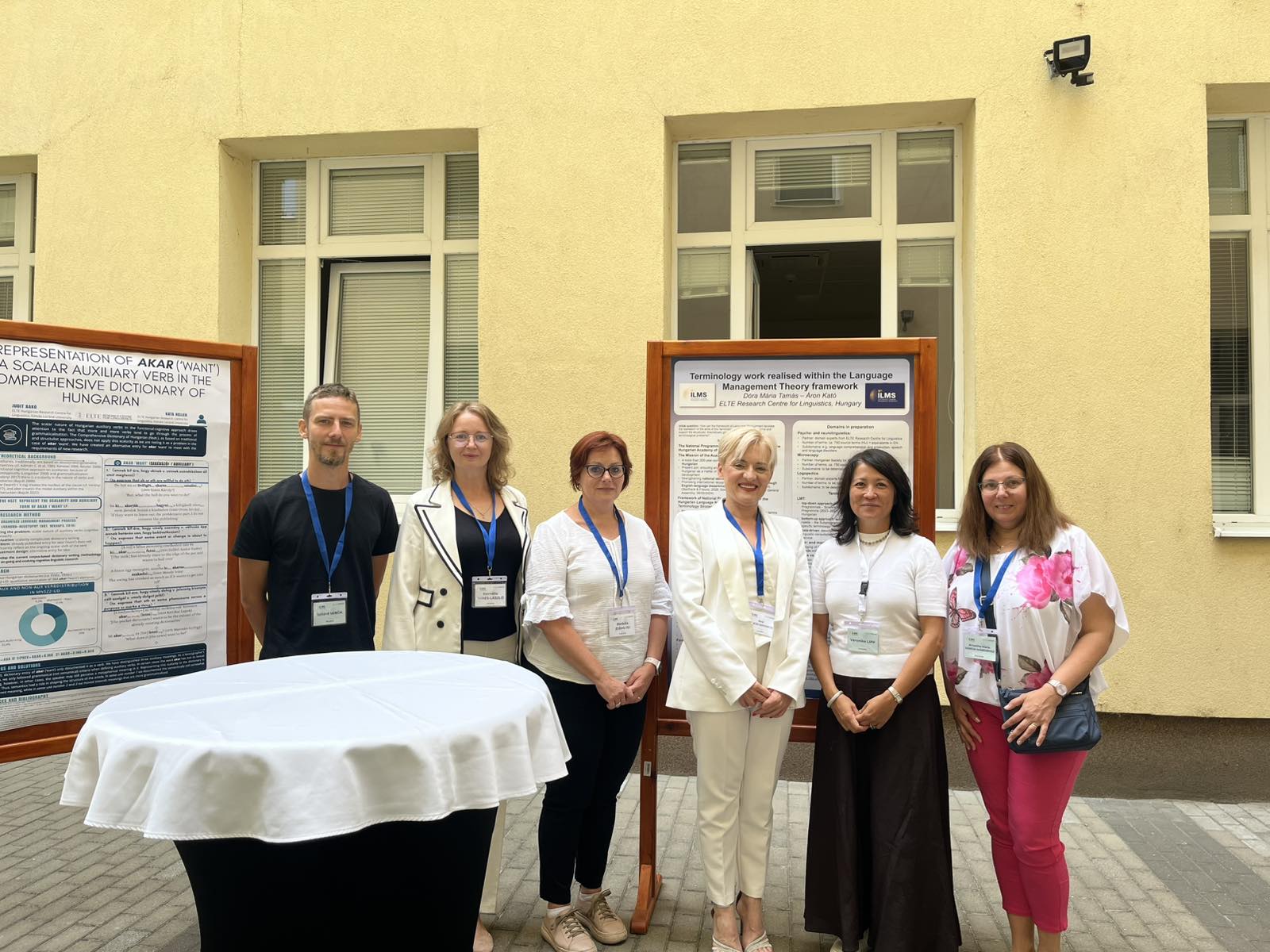
The HUN-REN Research Centre for Linguistics hosted the 9th International Language Management Symposium, focusing on the relationship between language management and terminological processes. Krisztián Váradi and Kornélia Hires-László represented Ferenc Rákóczi II Transcarpathian Hungarian University and the Antal Hodinka Research Centre for Linguistics at the international conference, held in Budapest on 3–4 September 2026.
In his online presentation, entitled “Harmonisation of Country-Specific Higher Education Terminology in the Ukrainian–Hungarian Context,” Krisztián Váradi examined the possibilities and challenges of aligning the terminology used in the Ukrainian and Hungarian higher education systems. The presentation was linked to a four-year research project launched in December 2023 with the support of the Hungarian Terminology Strategy Subprogramme of the Hungarian Academy of Sciences. The project aims to harmonise the educational terminology used in Hungary and seven other countries of the Carpathian Basin inhabited by Hungarian communities, as well as to develop new term candidates for conceptual categories that currently lack appropriate designations. The study interprets terminological harmonisation as a form of organised language management. The analysis identified the most significant differences between Hungarian and Ukrainian higher education terminology in the areas of academic positions, academic degrees and titles, grading systems, educational levels, governing bodies, admission and language examinations, and the organisation of the educational process.
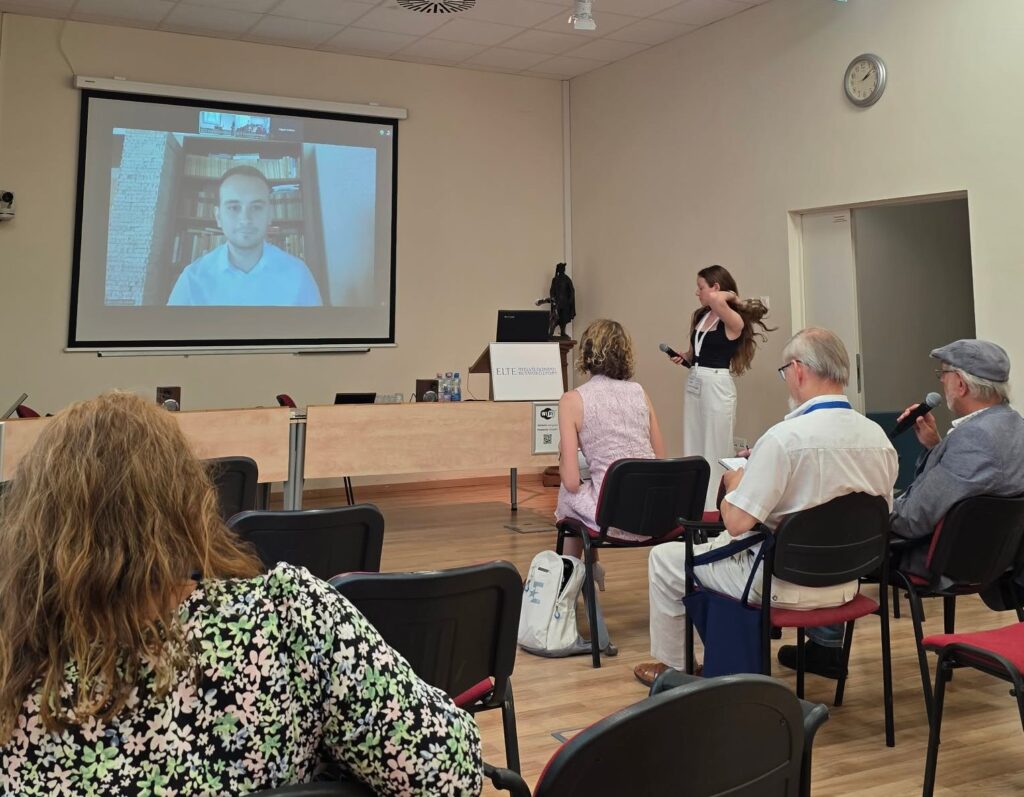
Kornélia Hires-László presented a paper co-authored with Ana Lehocki-Samardžić of Josip Juraj Strossmayer University of Osijek, entitled “Analysis of the Linguistic Landscape in Slovakia, Ukraine, Romania, Serbia, Croatia, Slovenia, and Austria from a Legislative Perspective, with Special Emphasis on the Inscription of Names for Inhabited Places.”The comparative study examined the legal and institutional conditions governing the public display of historical Hungarian place names in Hungarian-inhabited regions across seven countries. The presentation highlighted that the presence, absence and visual arrangement of place-name signs reflect not only the practical implementation of minority language rights but also the public recognition of a language community’s historical presence and attachment to a particular place.
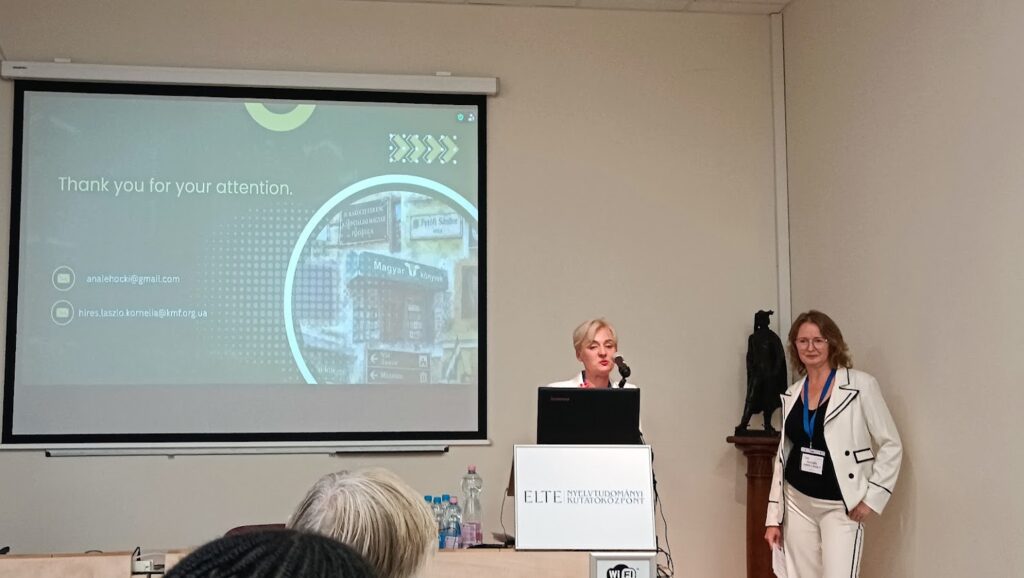
In addition to its high-quality academic programme, the conference provided an excellent opportunity to renew longstanding professional and personal relationships and to establish new connections and potential collaborations. We are grateful to the conference organisers for the opportunity to participate, present our research findings and engage in this stimulating academic event.