Researchers from the Antal Hodinka Research Centre for Linguistics participated in the 9th International Congress of Hungarian Studies, held at the University of Miskolc from 24 to 29 August 2026. They presented their research findings within the framework of two symposia.
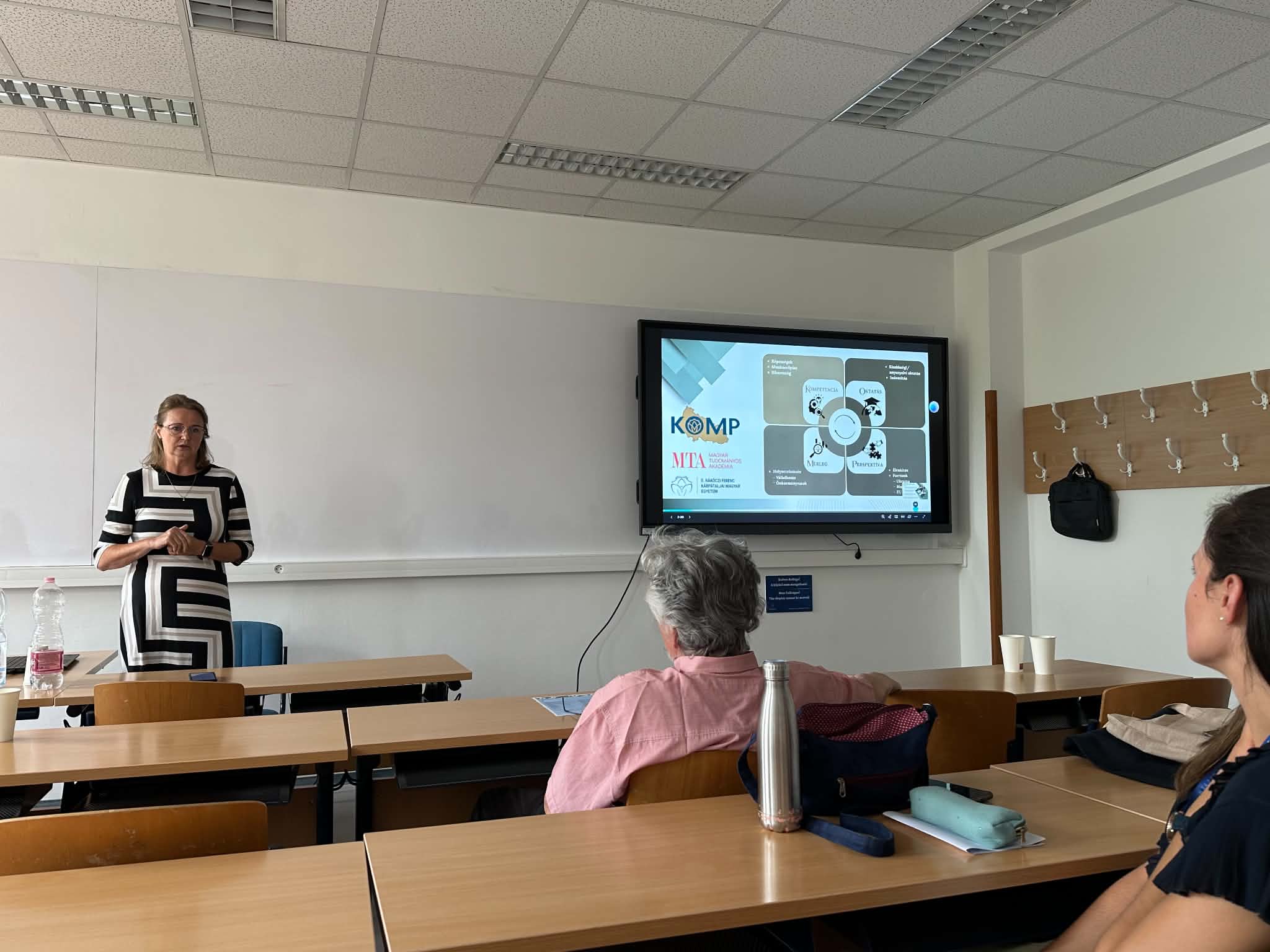
At the symposium entitled Language and Identity, István Csernicskó and Kornélia Hires-László delivered a presentation entitled Mother-Tongue (Hungarian) Reading Comprehension among Students in Hungarian-Medium Schools in Transcarpathia: Sociolinguistic Influences in a Multilingual Educational Environment. The presenters introduced the results of the 2024 and 2025 Transcarpathian Hungarian Schools Competence Assessments, conducted as part of the KOMP project within the National Programme of the Hungarian Academy of Sciences. The programme is implemented with the professional and financial support of the Hungarian Academy of Sciences, with the involvement of the Hungarian Educational Authority and through the coordinated work of the research centres of Ferenc Rákóczi II Transcarpathian Hungarian University. The presentation provided an insight into the methodological background and key findings of the assessments. In line with the theme of the symposium, particular attention was devoted to the effects of home language use, bilingualism and different patterns of multilingualism on reading comprehension in the students’ mother tongue. The results demonstrated that the educational consequences of bilingualism cannot be interpreted uniformly: they depend on the linguistic foundations upon which multilingualism develops and on the role Hungarian plays in students’ family and school communication.
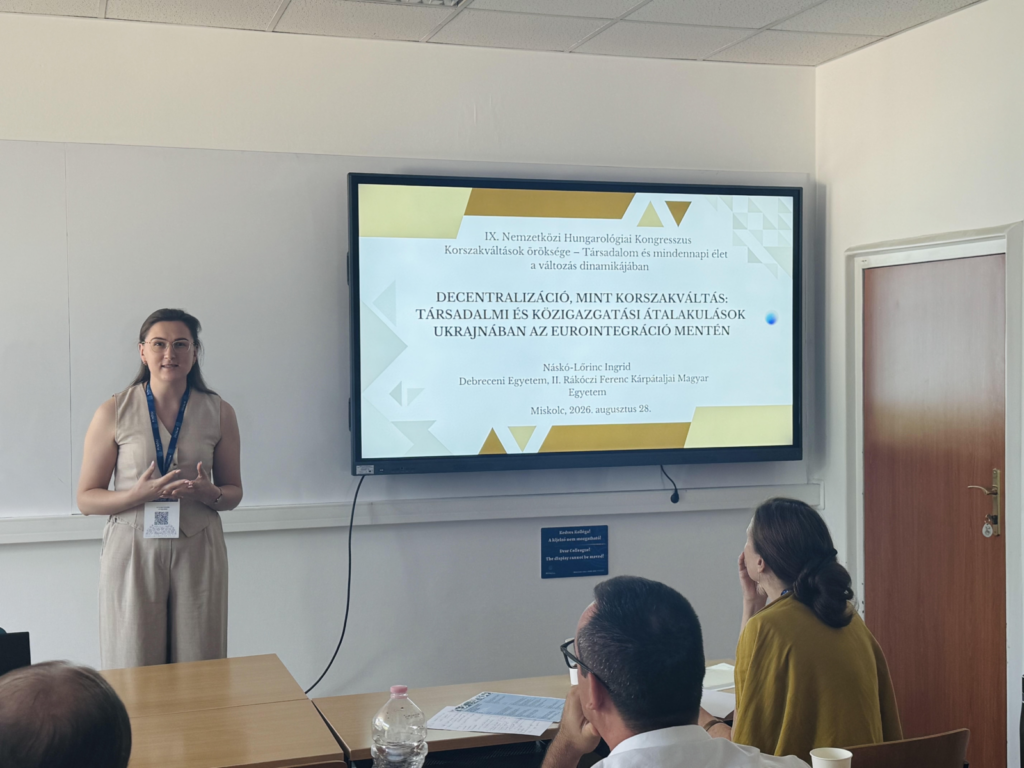
At the symposium entitled The Legacy of Changing Eras: Society and Everyday Life in the Dynamics of Transformation, Ingrid Lőrinc delivered a presentation entitled Decentralisation as a Turning Point: Social and Administrative Transformations in Ukraine in the Context of European Integration. In her presentation, she examined the decentralisation process in Ukraine and its social and administrative consequences. She discussed how the reform had transformed the functioning of local communities and the responsibilities of local governments, while also exploring how these changes are connected to Ukraine’s European integration efforts.
Participation in the congress provided the researchers of the Antal Hodinka Research Centre for Linguistics with an opportunity to present their current research on the Hungarian community in Transcarpathia to an international academic audience and to contribute to the scholarly dialogue on linguistic, educational, social and administrative transformations.