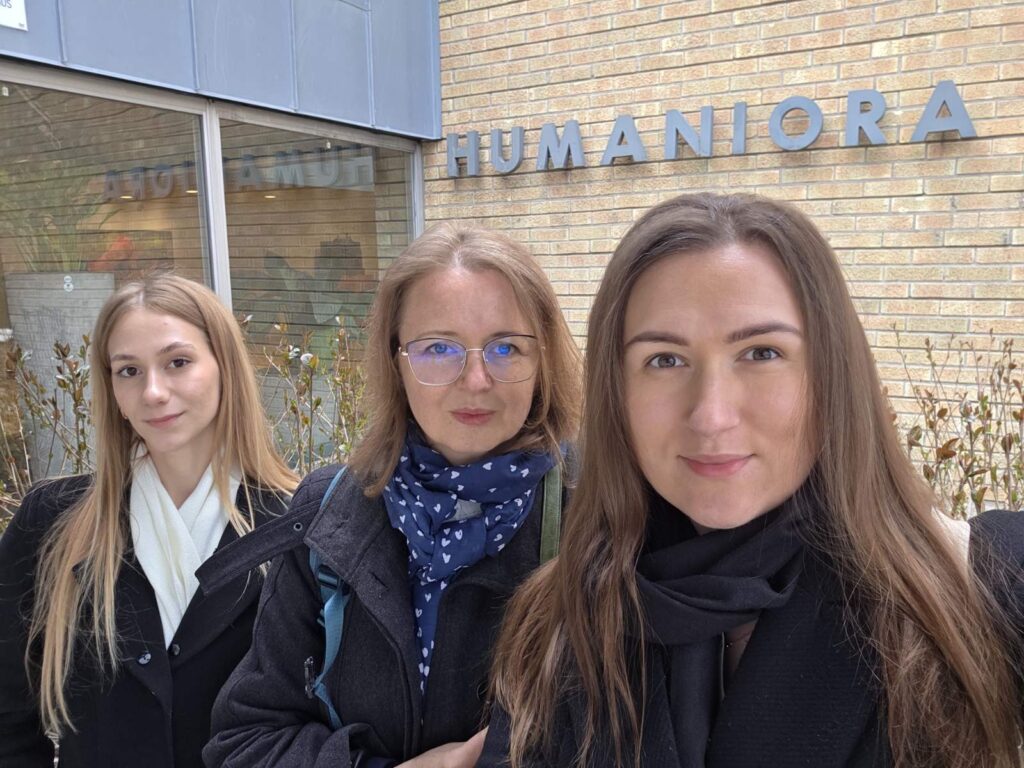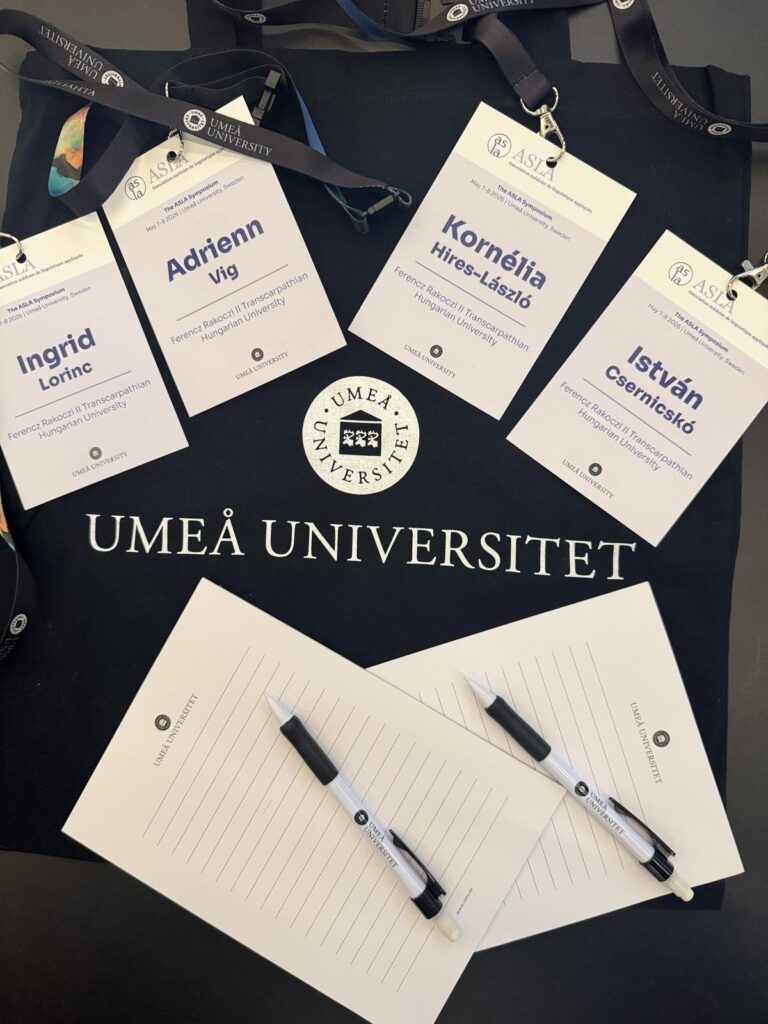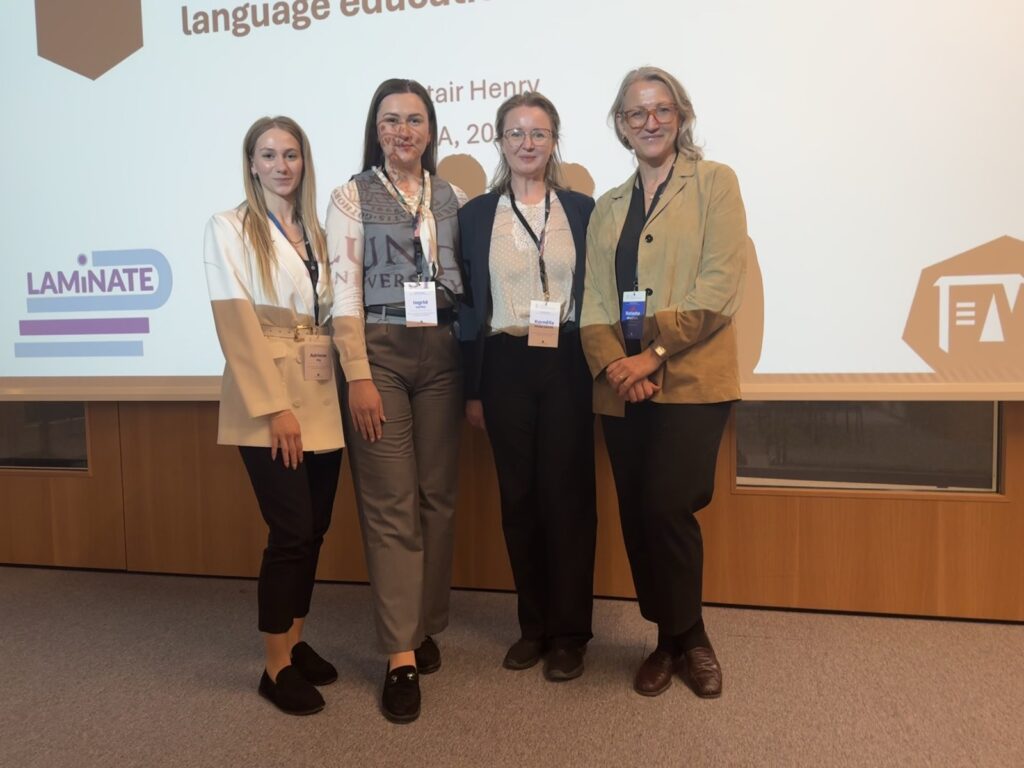
On 7–8 May 2026, the international conference of ASLA, the Swedish Association for Applied Linguistics, was held at Umeå University. This year’s conference focused on multilingualism, with particular attention to the role of language in minority, majority and educational contexts.
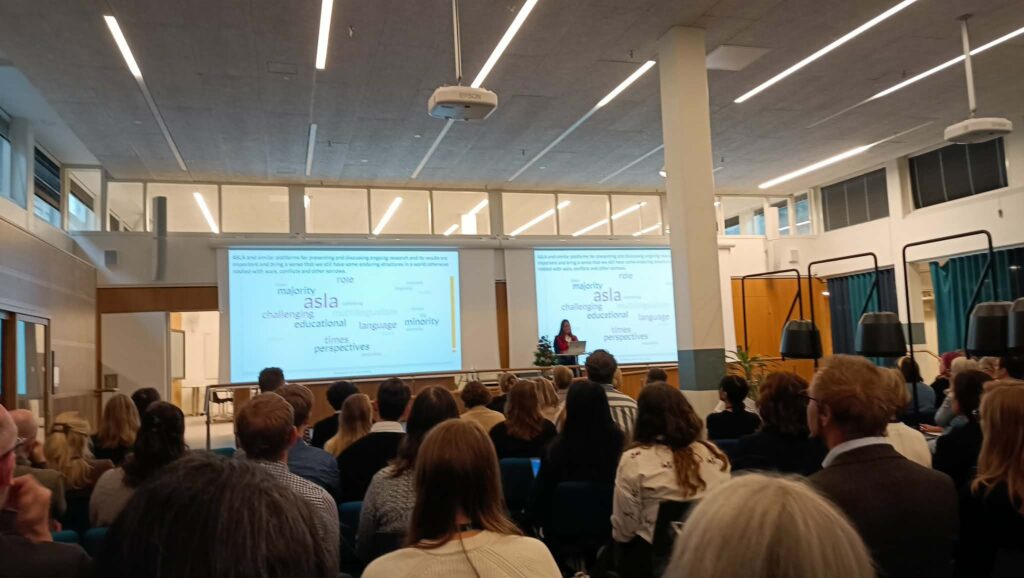
The central theme of the conference was especially relevant for the Hungarian minority community in Transcarpathia, where multilingualism is part of everyday life. In the region, several languages are present in daily communication, education, the linguistic landscape and institutional language use. At the same time, the ongoing war, changes in language policy and the challenges faced by minority education make it particularly important to present the situation of the Transcarpathian Hungarian community in an international academic context.
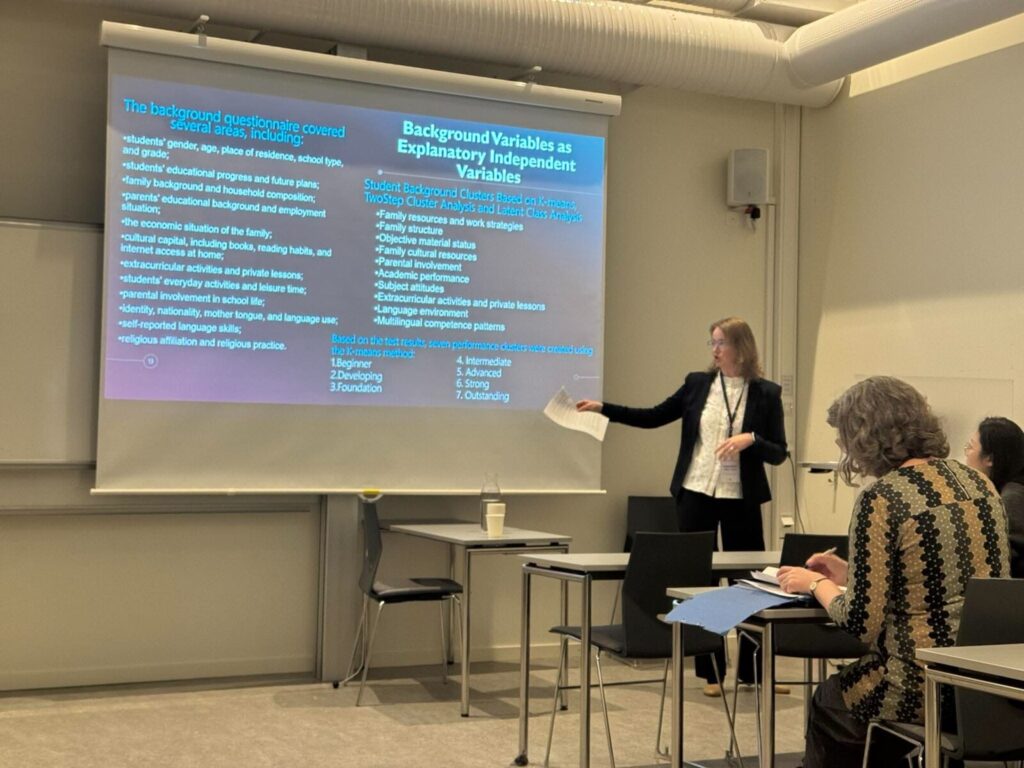
The Antal Hodinka Research Centre for Linguistics participated in the conference with two presentations. Kornélia Hires-László and István Csernicskó, Rector of Ferenc Rákóczi II Transcarpathian Hungarian University and Professor at the Department of Philology, delivered a joint presentation entitled “Competency Assessment in Minority Hungarian Education: Challenges and Opportunities in Ukraine.” Their presentation discussed the role of competency assessment in Hungarian minority education, as well as the challenges and opportunities connected to such measurements in Ukraine.
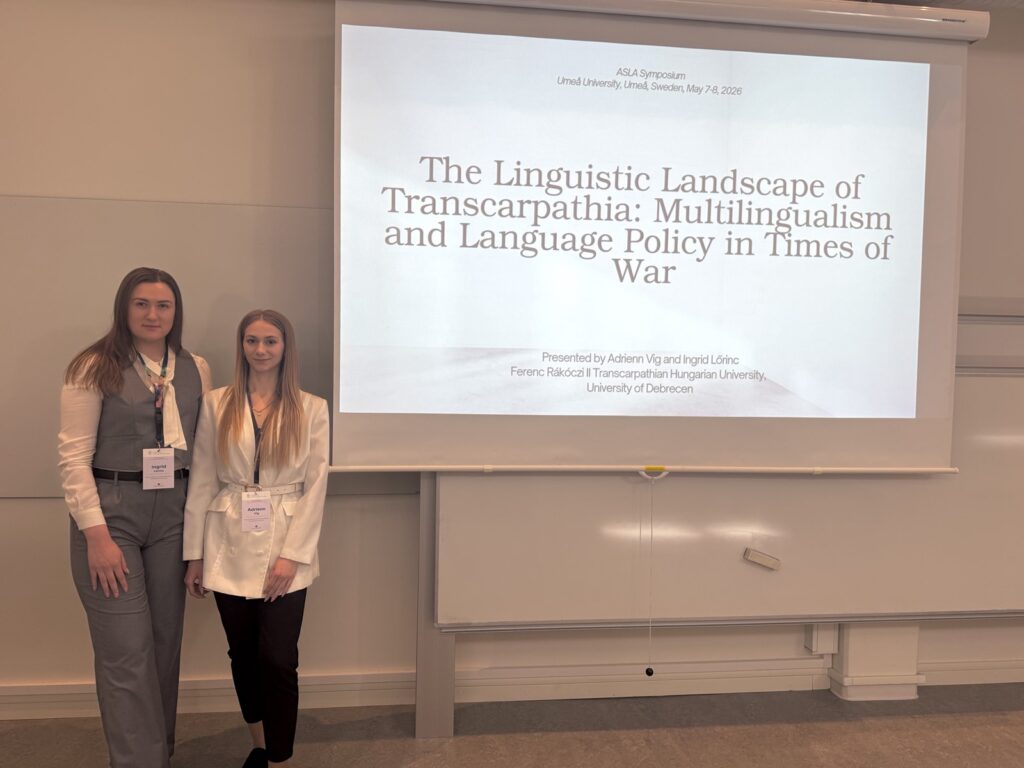
The second presentation, entitled “The Linguistic Landscape of Transcarpathia: Multilingualism and Language Policy in Times of War,” was delivered by Ingrid Lorinc and Adrienn Vig. The presentation examined the linguistic landscape of Transcarpathia, focusing on how multilingualism and language policy are reflected in public spaces, institutions and settlements during the war. It also highlighted the changes that can be observed in the visibility and use of languages in the region.
Participation in the ASLA international conference provided an opportunity to make the linguistic, educational and social situation of the Transcarpathian Hungarian minority visible in an international scholarly environment. The presentations also contributed to demonstrating that multilingualism in Transcarpathia is not only a linguistic phenomenon, but also a key issue related to the everyday life, educational opportunities and language rights of the minority community.