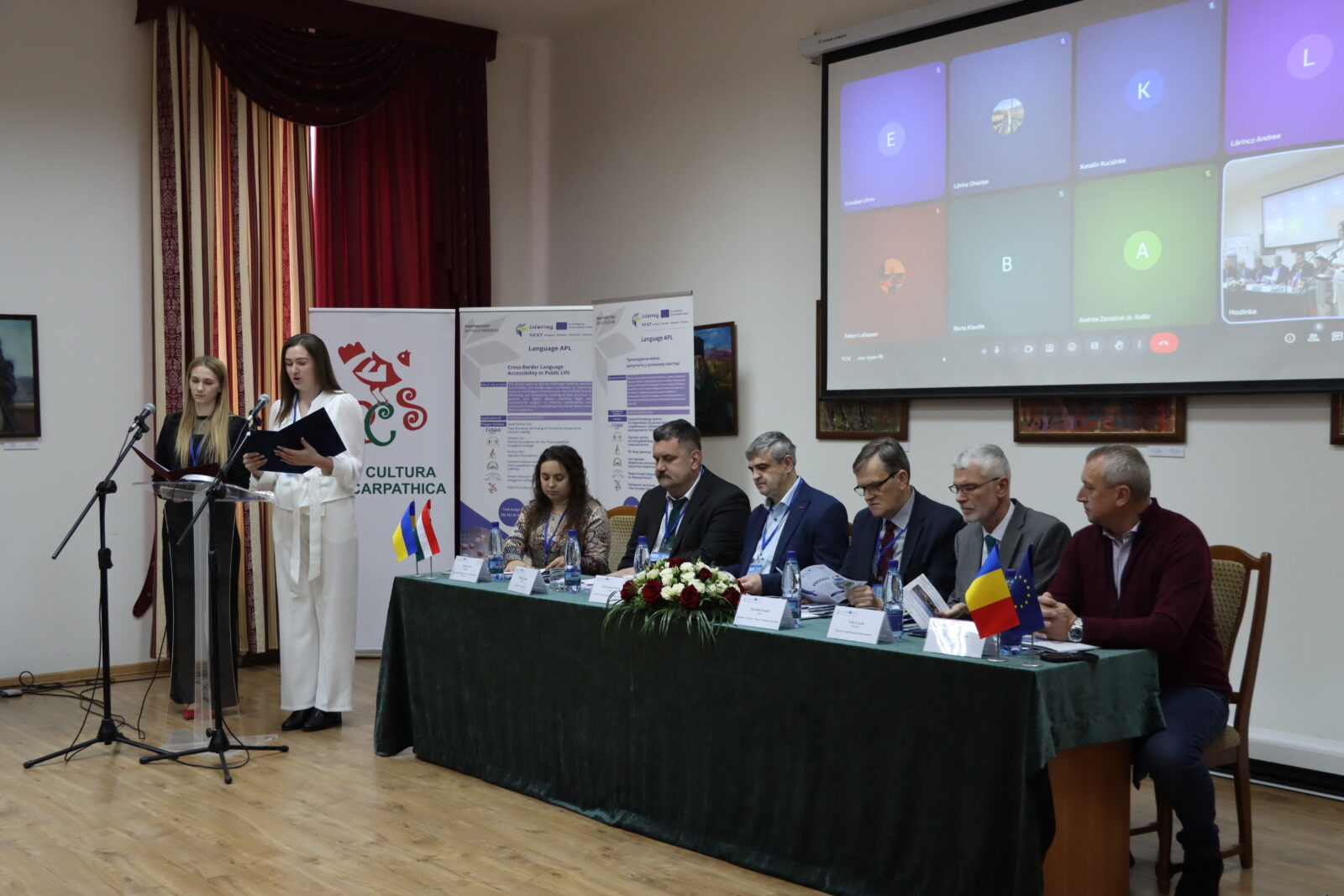
The Interreg project entitled Cross-Border Linguistic Accessibility in Public Life concluded on 25–26 November with an international and interdisciplinary conference. The project was implemented through the cooperation of Hungary, Romania, and Ukraine, with the support of the European Union. The event was hosted by Ferenc Rákóczi II Transcarpathian Hungarian University. The large-scale project, running from 1 January to 31 December, is being carried out with the professional involvement of the Hodinka Antal Linguistic Research Center.
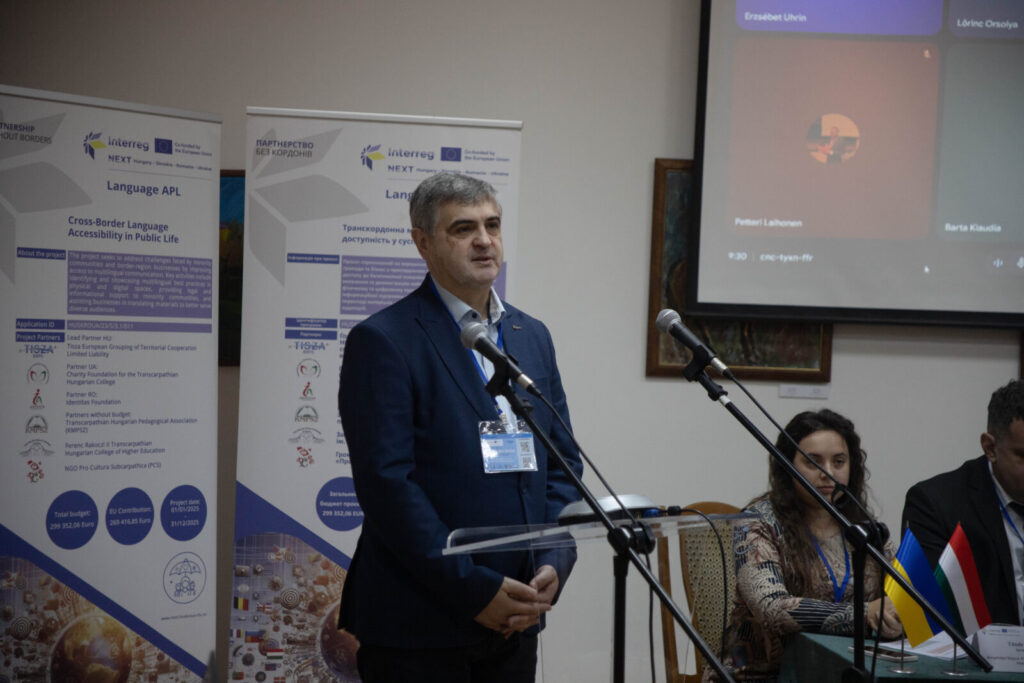
At the opening of the conference, welcome addresses were delivered by István Csernicskó, rector of the Rákóczi University; Tünde Tóth, director of the Foundation for the Transcarpathian Hungarian College of Higher Education; László Vida, consul general of the Consulate of Hungary in Berehove; Oszkár Seszták, president of the Tisza EGTC and of the General Assembly of Szabolcs-Szatmár-Bereg County; Csaba Pataki, president of the Satu Mare County Council; and Zoltán Babják, mayor of Berehove.
Participants also had the opportunity to hear the reflections of Viktória Ferenc, member of the European Parliament.
One of the project’s key objectives was to recognize and present exemplary practices in the field of linguistic accessibility. Within this framework, five institutions and organizations received awards:
- TV21 Uzhhorod
- Velykodobron Lyceum of the Velykodobron Village Council
- Solotvyn Settlement Territorial Community
- Ferenc Gál, owner of Franklin’s Store
- Fratelli enterprise, led by Attila Nyiscsák
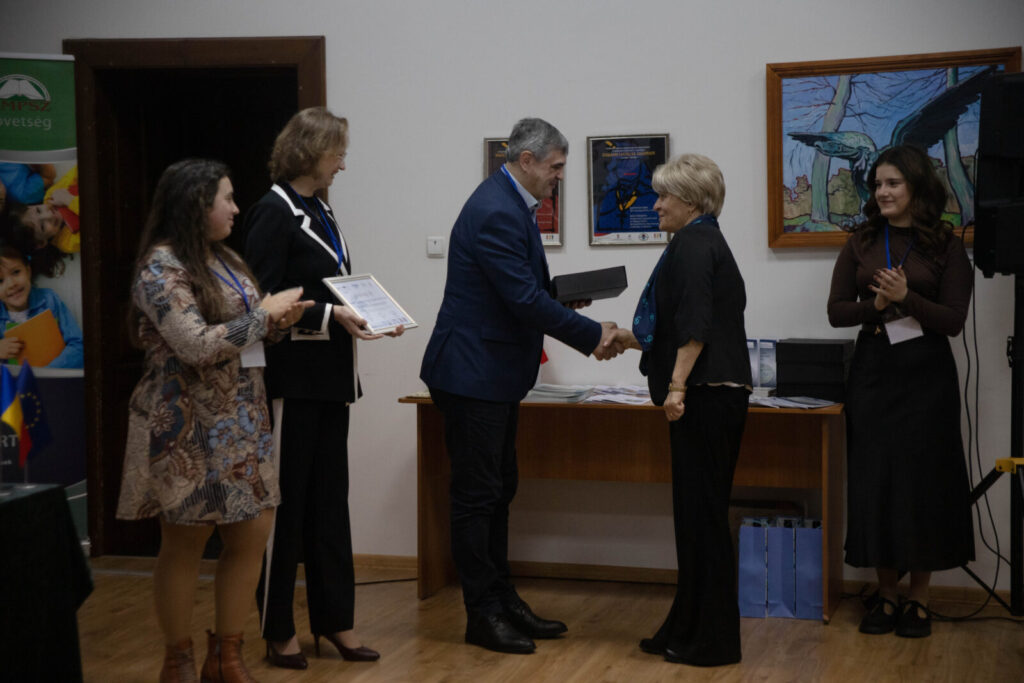
The awardees share a common commitment to consistently promoting multilingualism and linguistic inclusion through their activities.
The professional programme of the conference was opened by a keynote lecture by Petteri Laihonen, who presented practical experiences of constitutional bilingualism in Finland. This was followed by a presentation by István Csernicskó on recent changes in language legislation and the current state of linguistic accessibility in Ukraine.
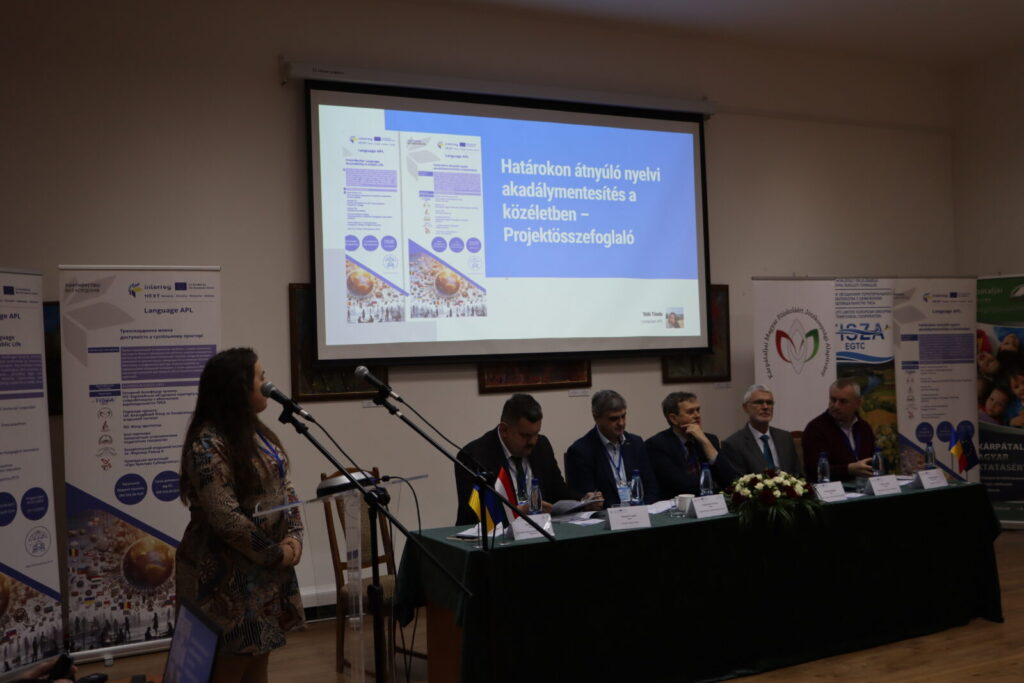
In the second session, Angella Sorbán focused on the relationship between economic life and language use, demonstrating how linguistic barriers affect the economic opportunities of minority communities and highlighting the advantages that linguistic accessibility offers to businesses. Ildikó Vančo analysed the situation of minority language use in Slovakia, drawing attention to the discrepancies between legal frameworks and everyday practice. The plenary session concluded with a presentation by István Kozmács on the visibility of small languages and the social representation of their speech communities.
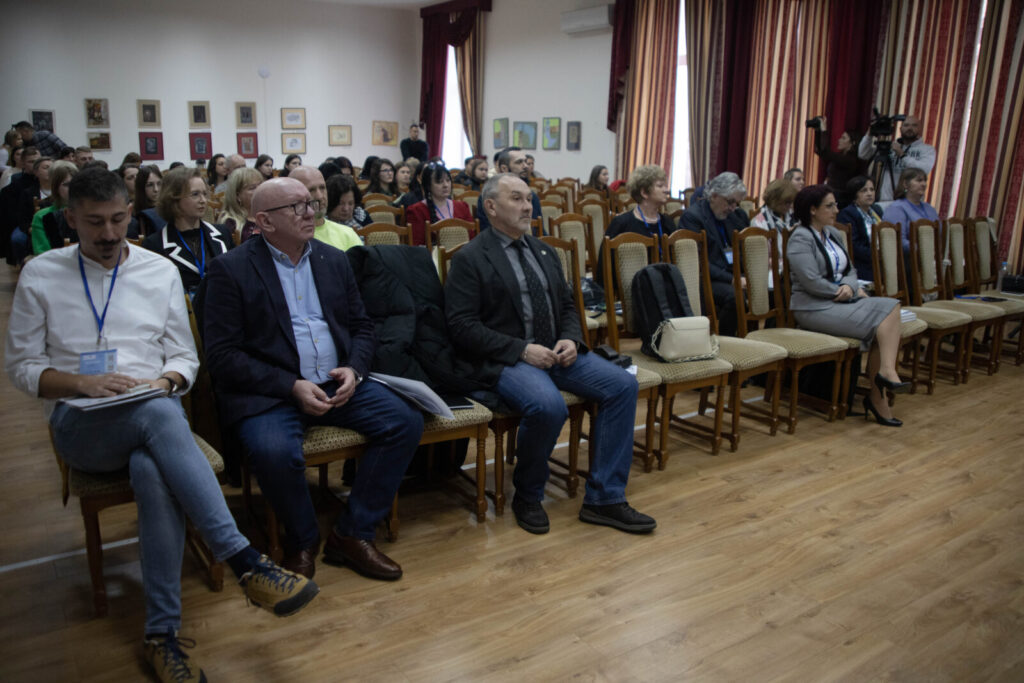
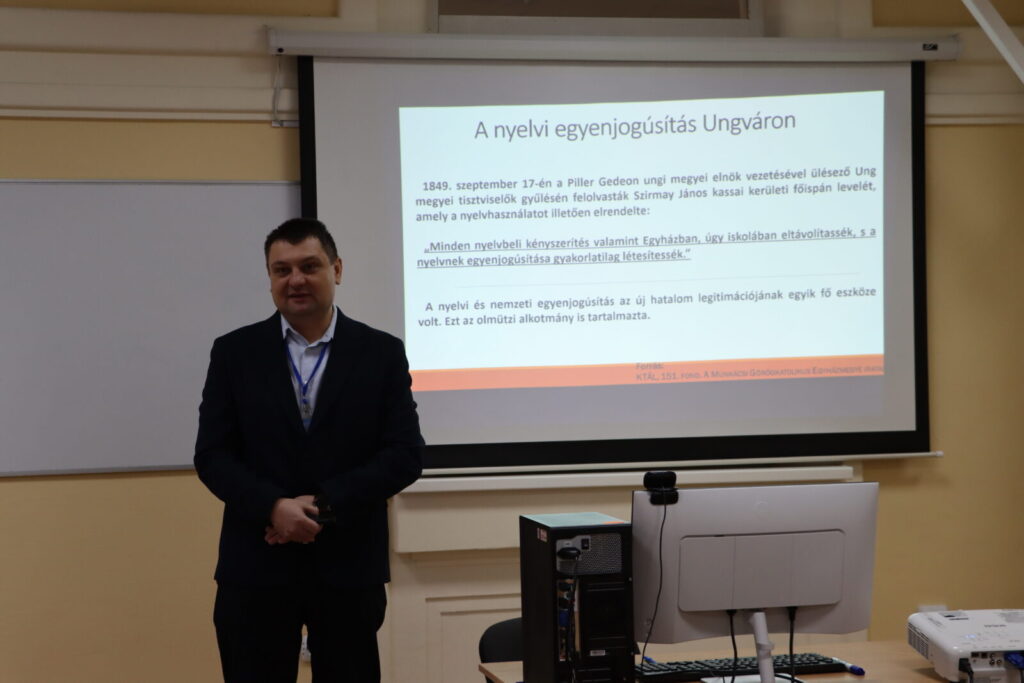
On the second day of the conference, parallel section sessions were held, during which 49 researchers from 9 countries presented their latest findings. The topics covered a broad range, from educational language policy and digital accessibility to multilingual communication in public life.
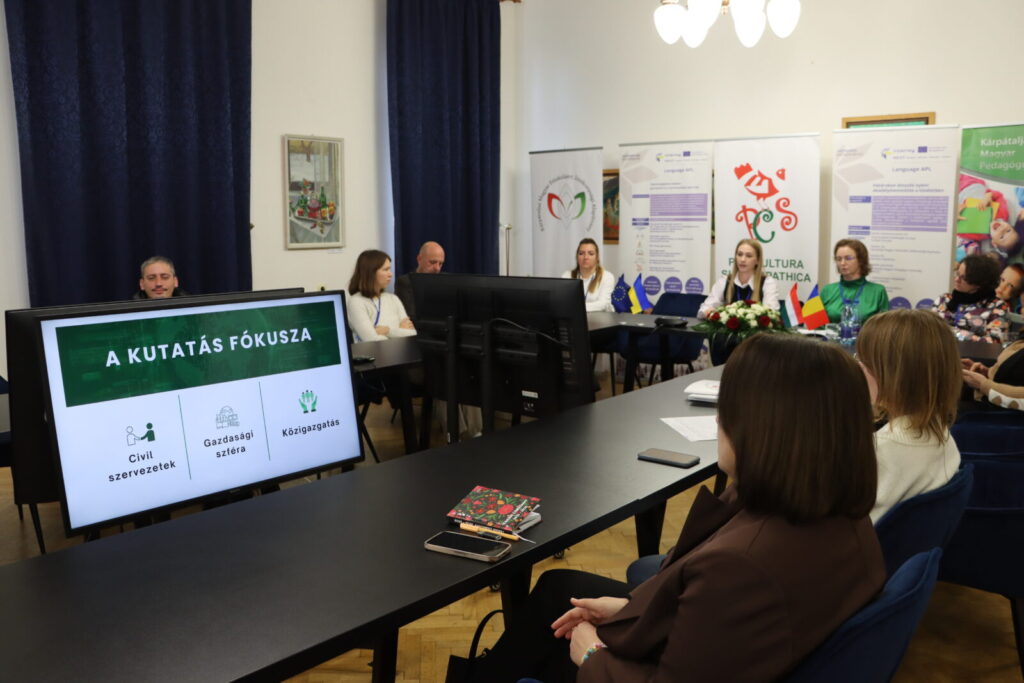
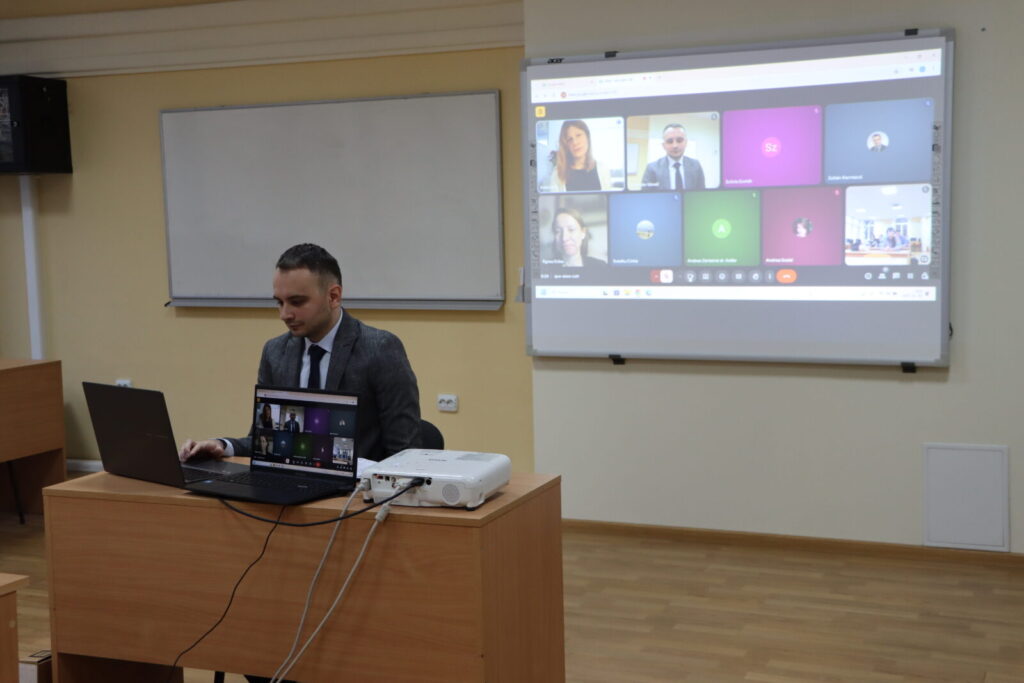
The two-day event highlighted that linguistic accessibility is not merely a professional challenge but a shared societal responsibility in which institutions, local governments, researchers, and citizens can achieve meaningful results through cooperation.
The examples presented by the speakers and experts also demonstrate that supporting multilingualism and ensuring linguistic rights is a cross-border task, while the exchange of good practices can initiate tangible and lasting change.
The HUSKROUA/23/S/3.1/011 Language APL project is implemented within the framework of the Interreg VI-A NEXT Hungary–Slovakia–Romania–Ukraine Programme 2021–2027, with the support of the European Union.