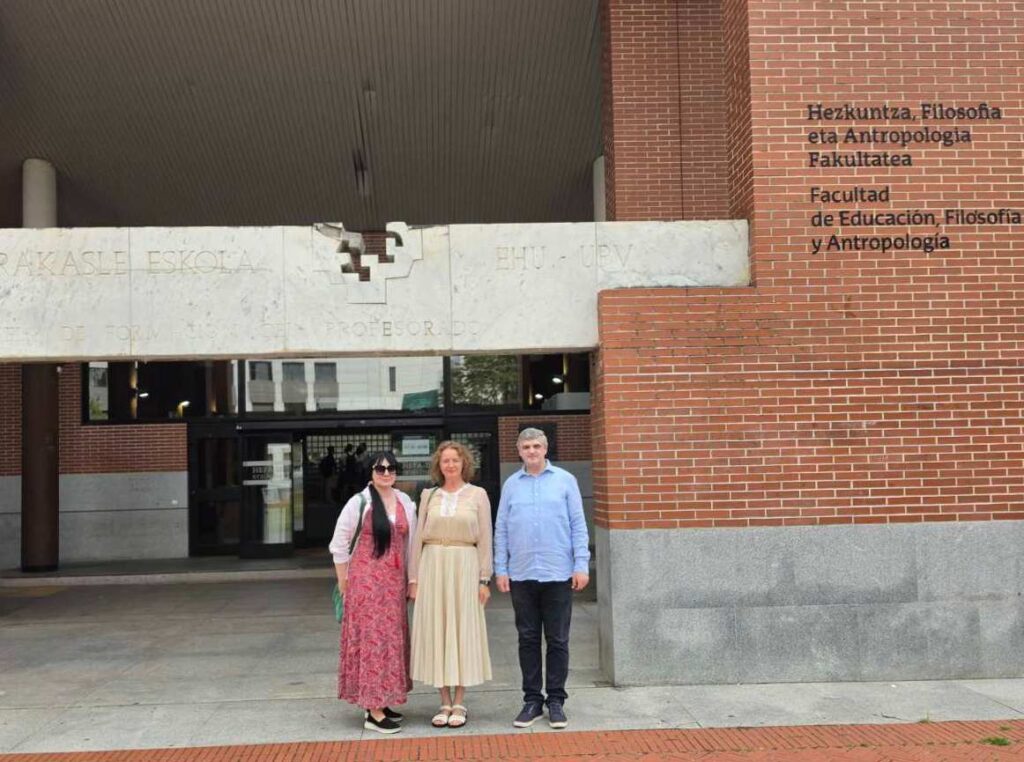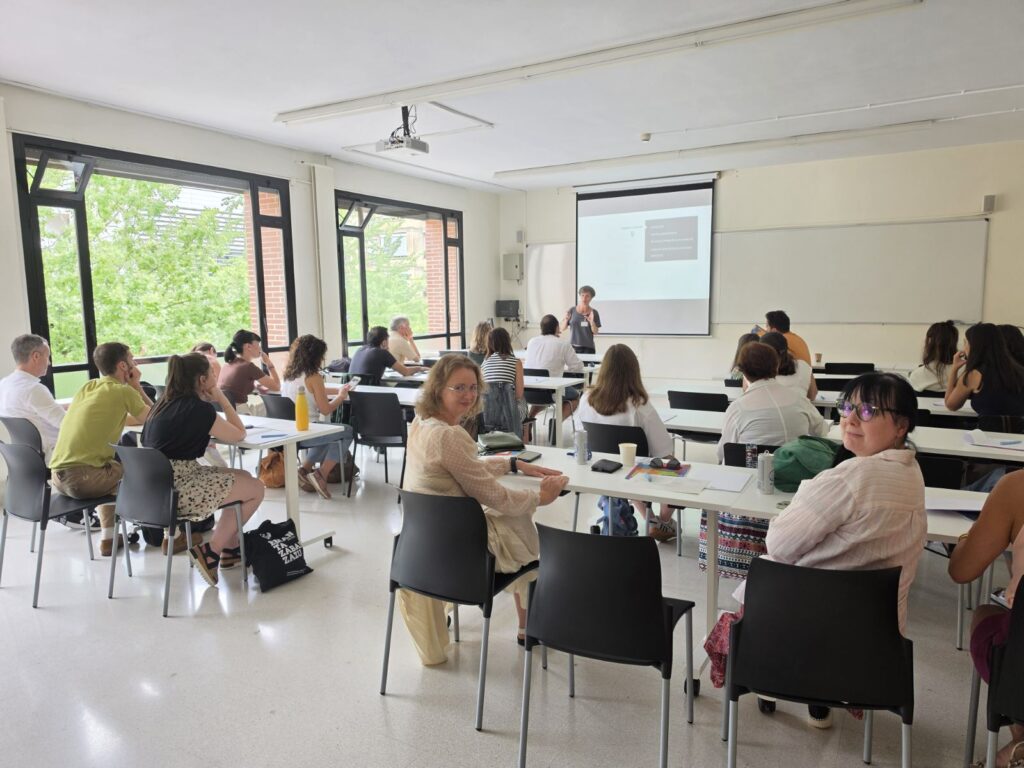
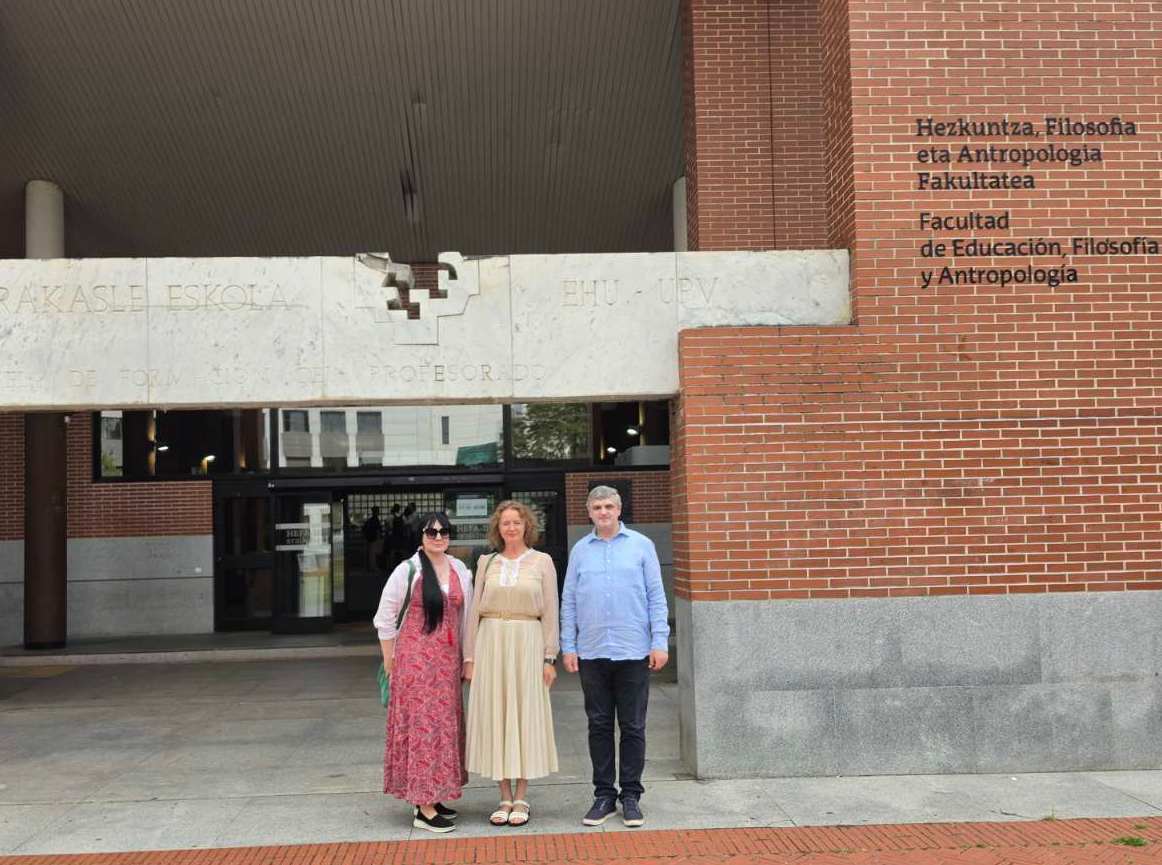
The international scientific conference entitled International Conference on Minority Languages and Multilingualism in European Schools – Practices, Challenges, and Future Prospects was held on 9 July 2026 at the Donostia–San Sebastián campus of the University of the Basque Country. The event focused on the role of European minority languages in education, practical experiences of multilingual education, and the current situation and future challenges of schools operating through minority languages. Ferenc Rákóczi II Transcarpathian Hungarian University was represented at the conference by Rector István Csernicskó, Anikó Beregszászi, Head of the Department of Philology, and Kornélia Hires-László, Head of the Antal Hodinka Research Centre for Linguistics.
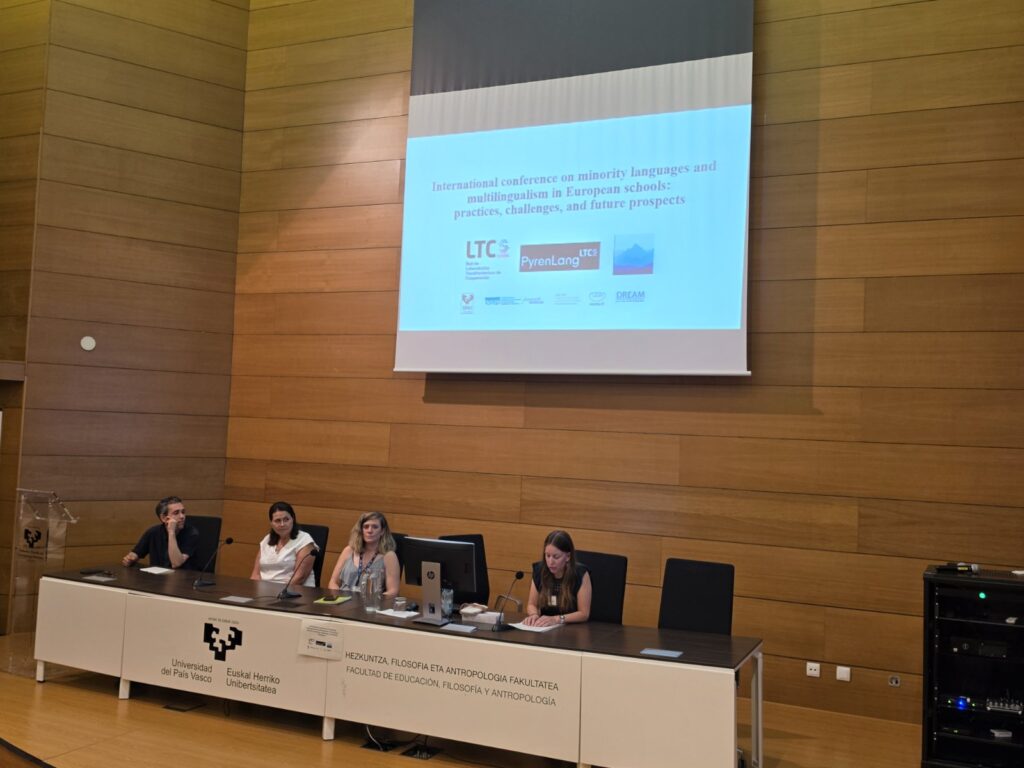
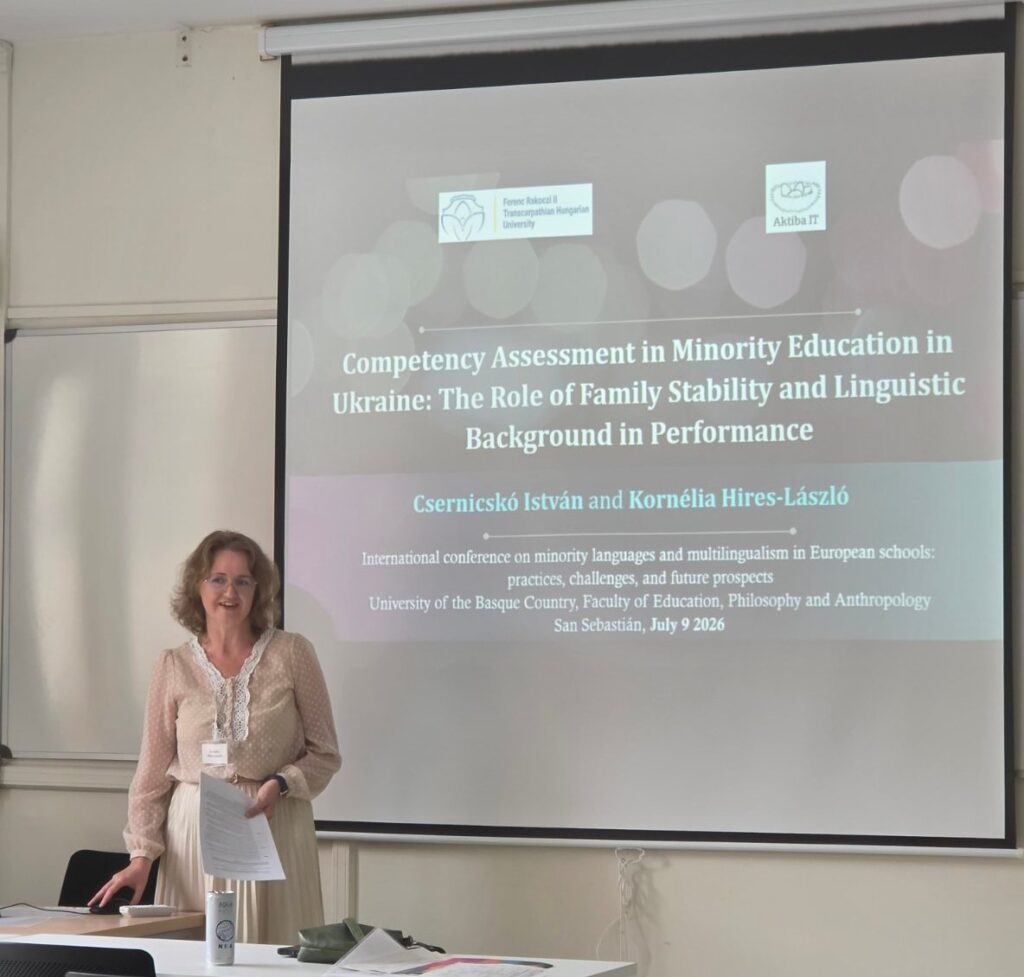
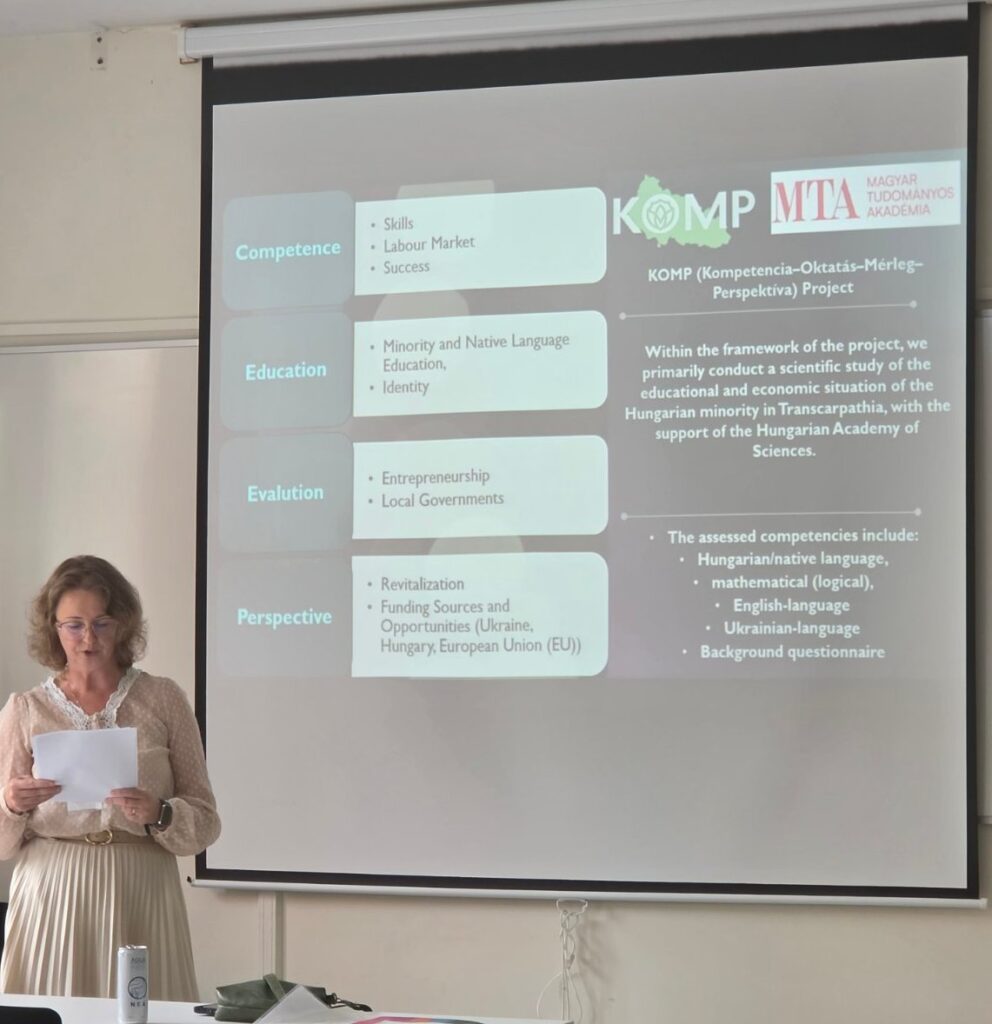
István Csernicskó and Kornélia Hires-László delivered a presentation entitled Competency Assessment in Minority Education in Ukraine: The Role of Family Stability and Linguistic Background in Performance. The presentation introduced the results of the KOMP – Competency, Education, Assessment and Perspective project, implemented within the framework of the National Research Programmes of the Hungarian Academy of Sciences. The presenters analysed data from the competency assessment conducted in Hungarian-medium schools in Transcarpathia, paying particular attention to the relationships between students’ family stability, social background, linguistic environment and academic performance. The findings highlighted that the effectiveness of minority education cannot be interpreted solely on the basis of students’ individual abilities or subject-specific achievement. The development of competencies is also influenced by families’ social and economic circumstances, the stability of family structures, cultural resources, parental support and language use in the home. The data further indicated that an adequate command of the mother tongue provides an essential foundation for the development of reading comprehension, cognitive skills and competencies in other school subjects.
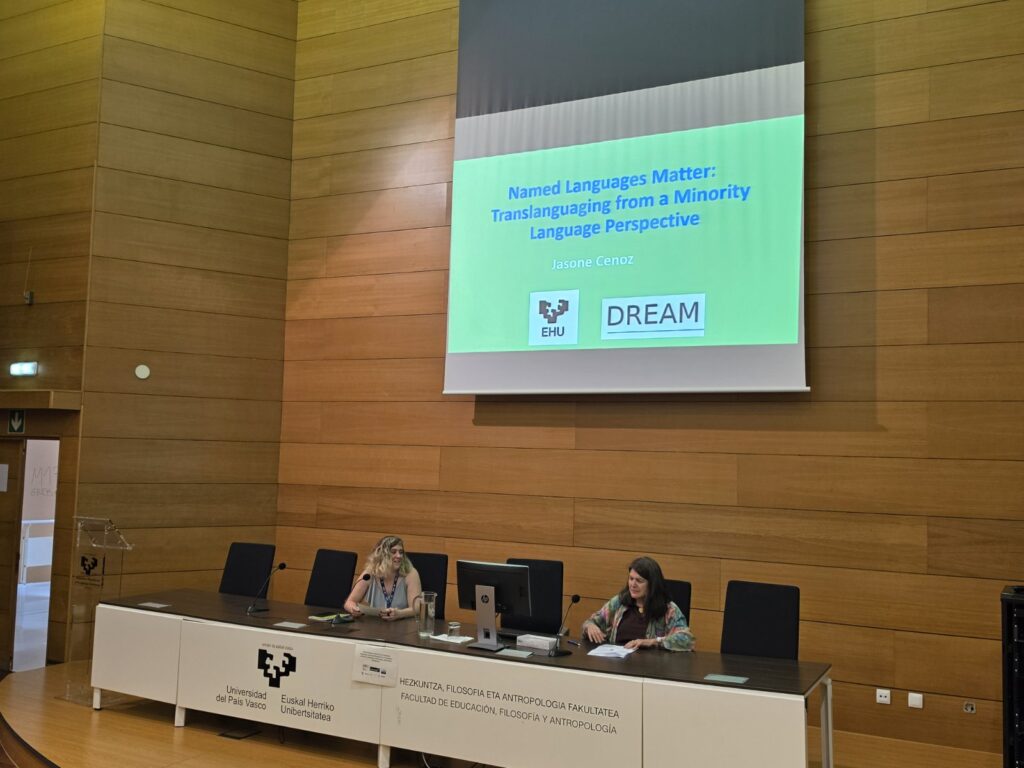
The presentation of the situation of Hungarian-language education in Transcarpathia and the findings of the large-scale empirical competency assessment conducted within the KOMP project proved especially significant in an international professional setting attended by internationally renowned linguists, education researchers and experts on minority languages from various parts of the world. The keynote speakers included Jasone Cenoz and Durk Gorter, whose work has had a major influence on international research into multilingualism, minority-language education and linguistic landscapes. The Transcarpathian findings attracted considerable interest because they provided a comprehensive overview of the functioning and assessment results of a minority education system whose everyday operation has been shaped in recent years by substantial changes in education policy, a multilingual environment and the conditions created by the war. The presentation was followed by a lively professional discussion, during which participants raised several questions concerning the methodology of the study, the role of background variables, the significance of mother-tongue competencies and the potential application of the results in educational practice.
The conference provided not only an opportunity to present the scientific results of the KOMP project to an international audience, but also an important forum for establishing professional contacts. During the event, representatives of Rákóczi University held professional discussions with specialists from several European universities and research centres, thereby laying the groundwork for future international cooperation. A central aim of the event was to compare different European experiences of minority education, promote interdisciplinary and cross-regional cooperation, and strengthen professional networks supporting linguistic diversity, social inclusion and equal educational opportunities. The participation of researchers from Rákóczi University contributed to ensuring that the experiences, challenges and scientifically grounded research findings of Hungarian minority education in Transcarpathia became part of the international professional dialogue.