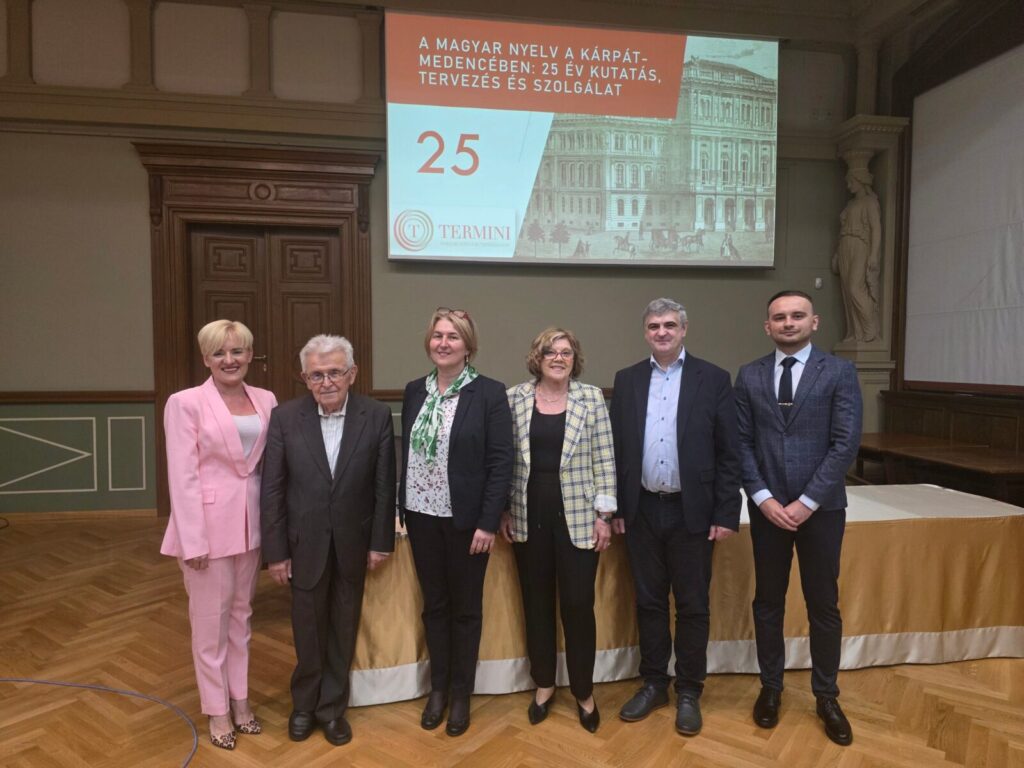
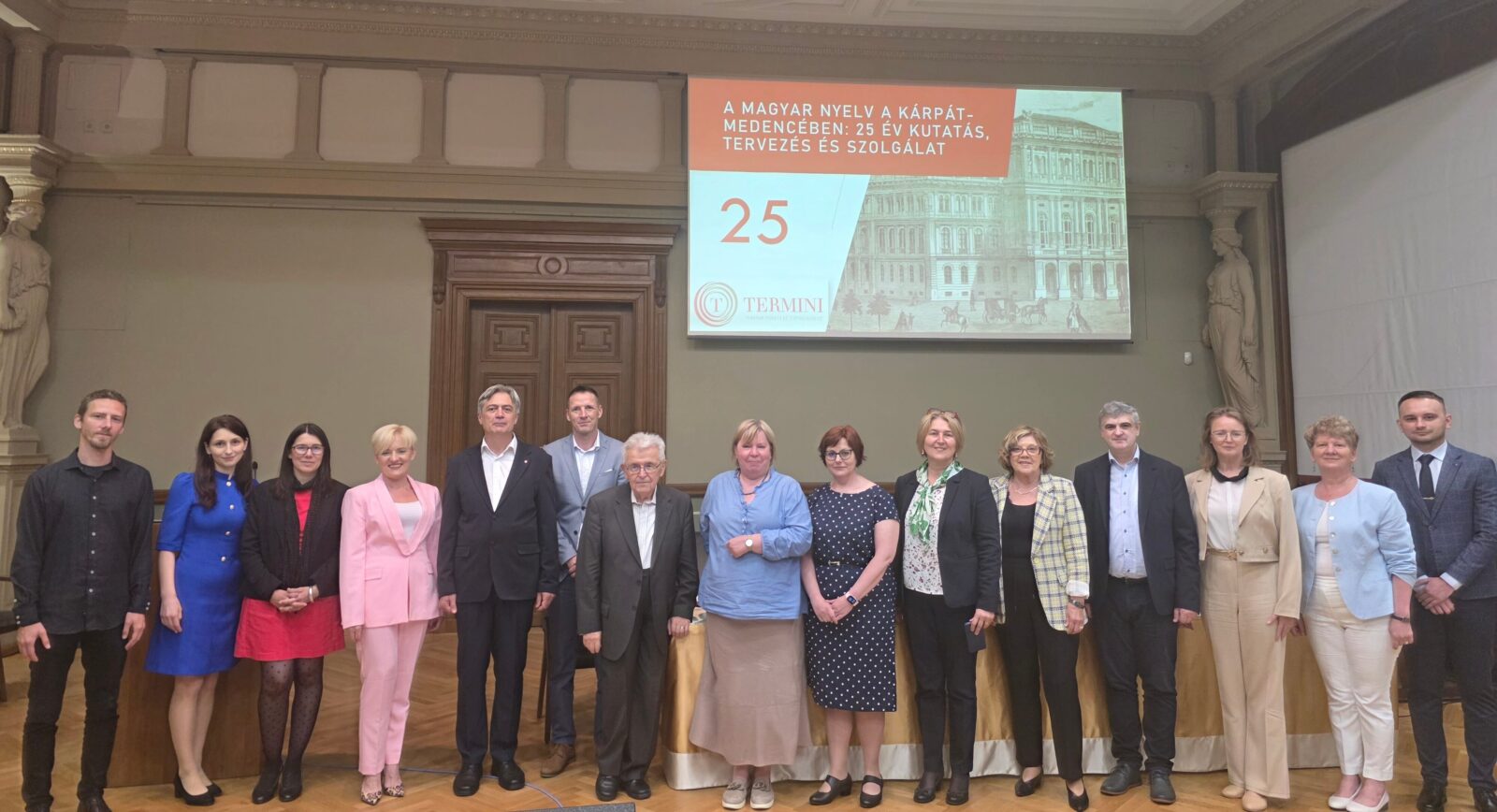
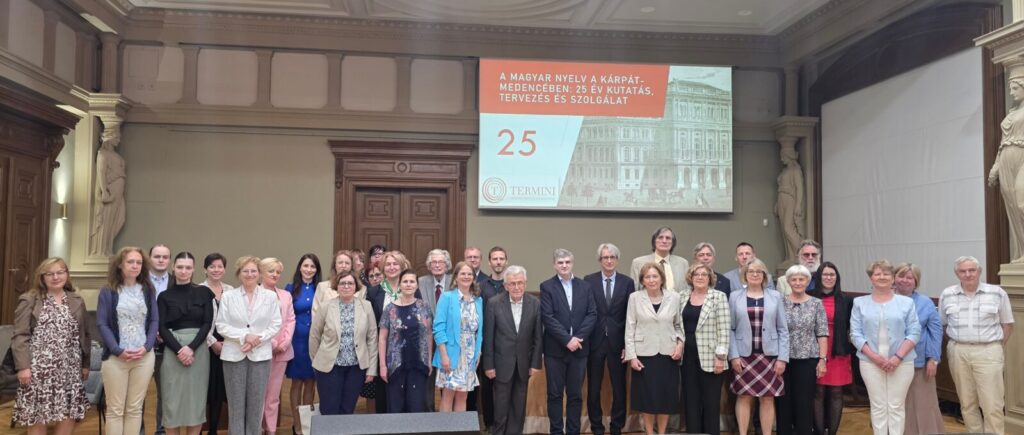
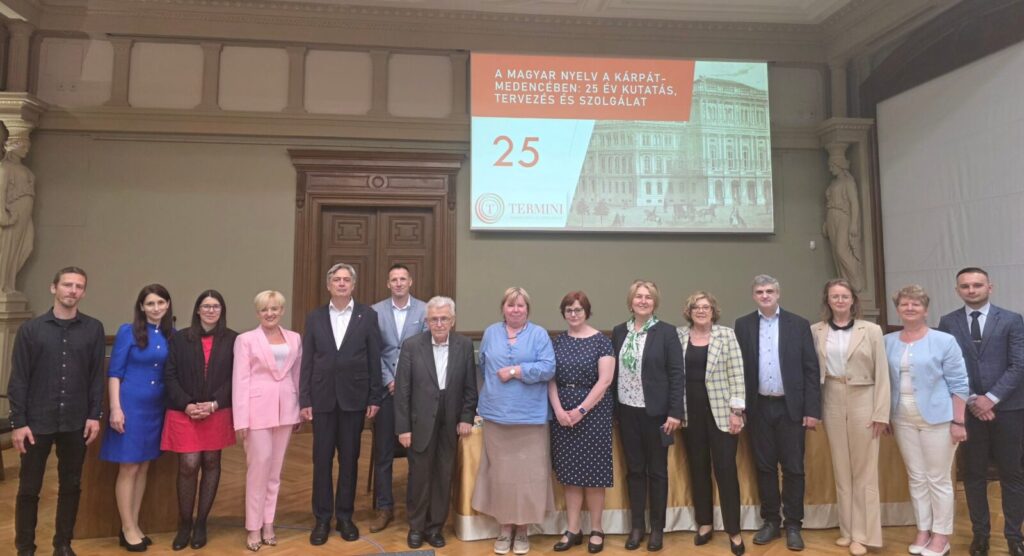
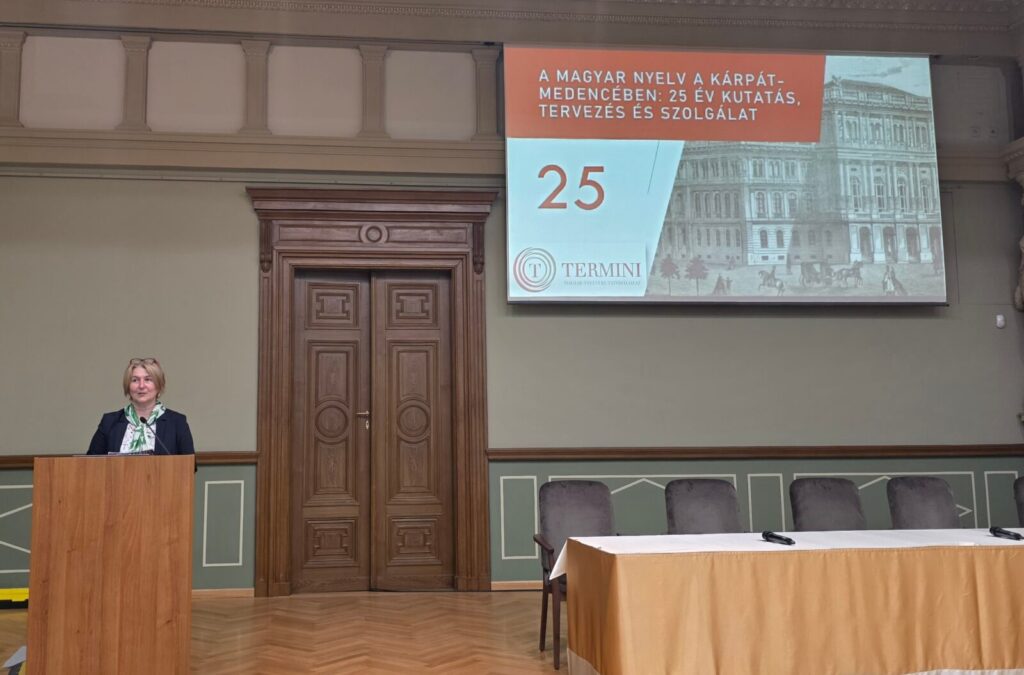
One of the leading professional workshops in the study of the Hungarian language in the Carpathian Basin, the Termini Hungarian Language Research Network, celebrated the 25th anniversary of its establishment with a jubilee conference. The event, entitled “The Hungarian Language in the Carpathian Basin: 25 Years of Research, Planning and Service,” took place on the Day of National Unity, 4 June 2026, in the Great Hall of the Hungarian Academy of Sciences.
The conference was of particular significance because the quarter-century-long activity of the Termini Research Network was presented as a coordinated linguistic research endeavour connecting the various regions of the Carpathian Basin. This work plays a decisive role in exploring the varieties of Hungarian used beyond Hungary’s borders, their social embeddedness, patterns of use, and language policy contexts.
At the opening of the conference, it was emphasised that the Hungarian Academy of Sciences has always regarded this work as professionally important and has continuously supported it. The new leadership of the Academy also considers the activity of the network to be of special importance in the future.
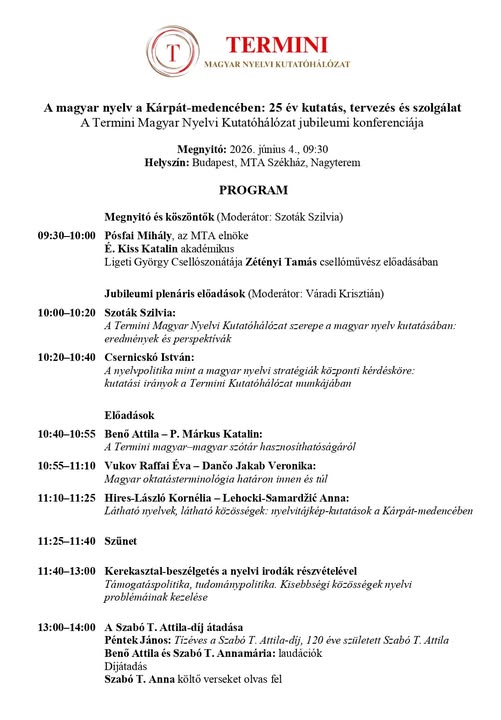
The event was moderated by Szilvia Szoták, President of the Termini Hungarian Language Research Network. Opening addresses were delivered by Mihály Pósfai, President of the Hungarian Academy of Sciences, Gábor Kecskeméti, Secretary General of the Hungarian Academy of Sciences, and Katalin É. Kiss, member of the Academy. The solemn atmosphere of the conference was enhanced by a performance by cellist Tamás Zétényi, who performed György Ligeti’s Sonata for Solo Cello.
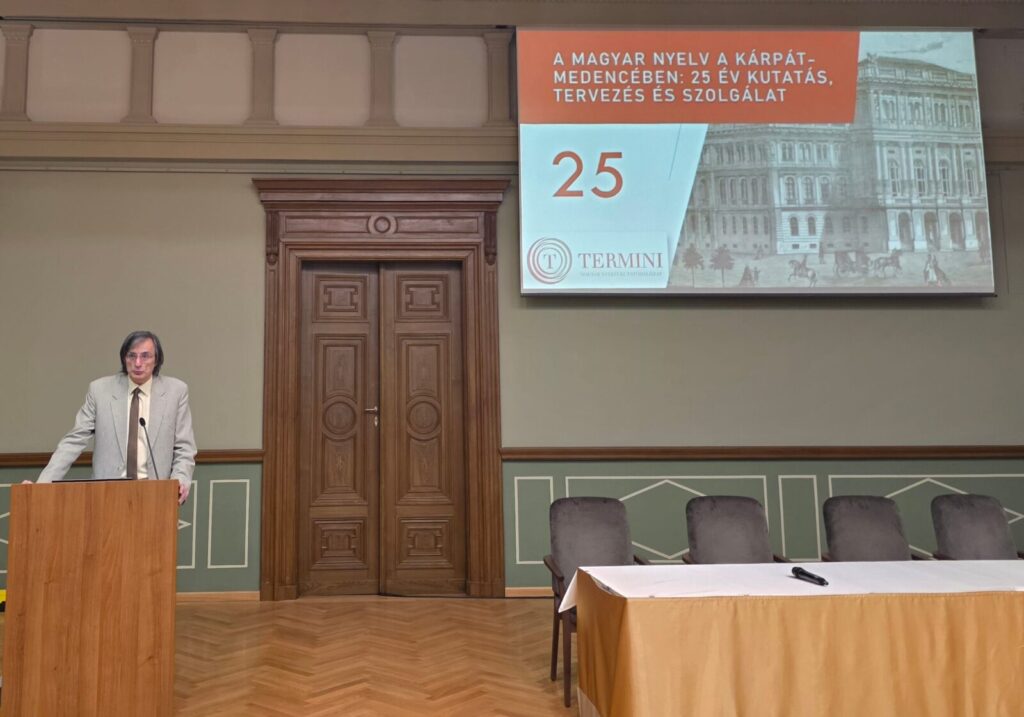
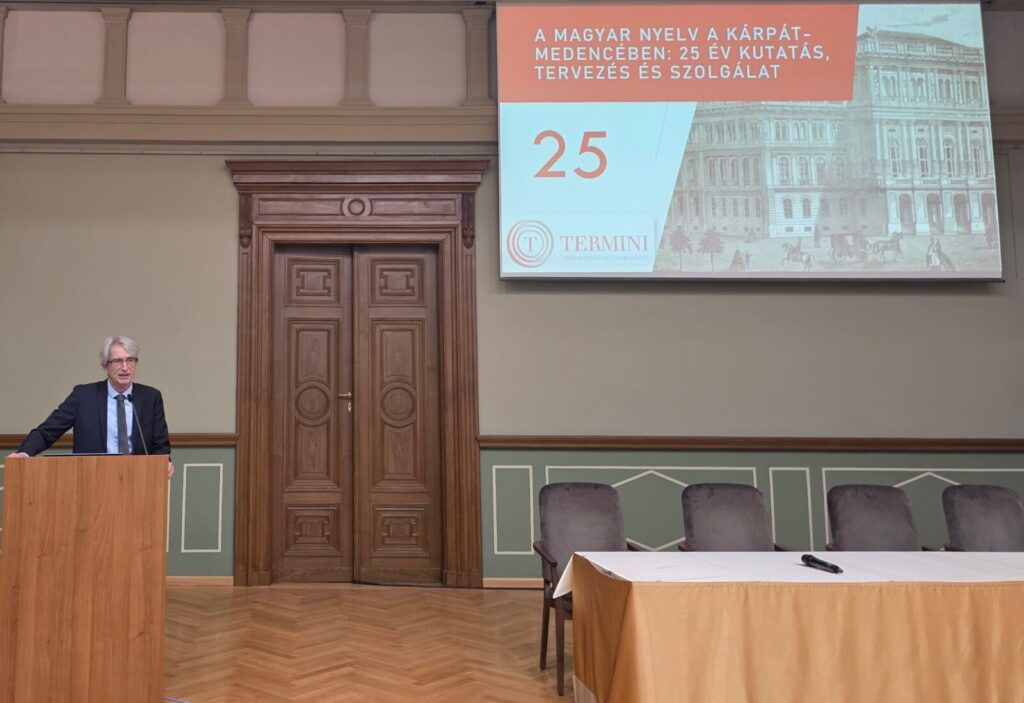
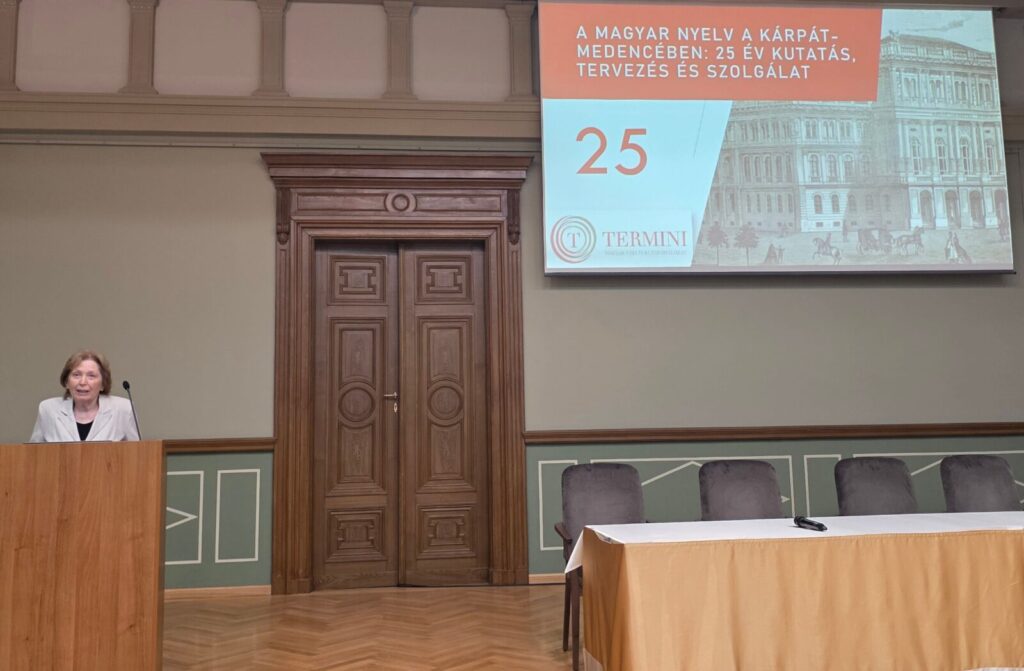
The Termini Hungarian Language Research Network brings together linguistic research centres operating in the Hungarian-speaking regions beyond Hungary’s borders. Its Transylvanian research centre is the Szabó T. Attila Linguistic Institute, its Slovakian centre is the Gramma Language Office, its Transcarpathian institution is the Antal Hodinka Research Centre for Linguistics, its Vojvodina research centre is the Verbi Linguistic Research Workshop, the Imre Samu Linguistic Institute is connected to the Muravidék and Burgenland regions, while research on Hungarian in Croatia is represented by the Glotta Language Institute. All regions of the network were represented at the jubilee conference.
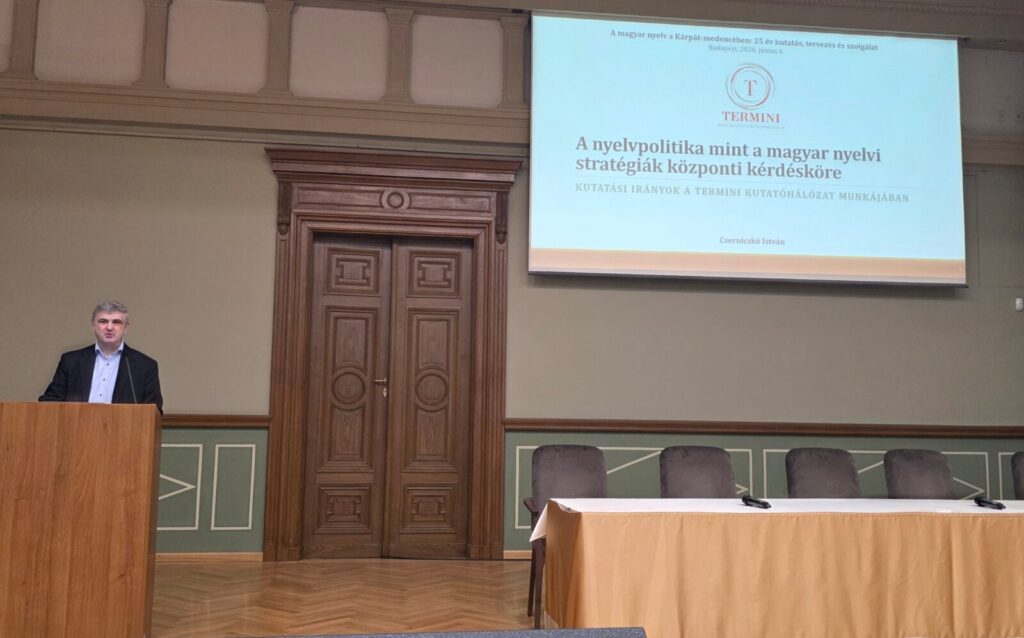
Within the framework of the plenary presentations, Szilvia Szoták delivered a lecture entitled “The Role of the Termini Hungarian Language Research Network in the Study of the Hungarian Language: Results and Perspectives.” This was followed by a lecture by István Csernicskó, Doctor of the Hungarian Academy of Sciences and Rector of Ferenc Rákóczi II Transcarpathian Hungarian University, entitled “Language Policy as a Central Issue of Hungarian Language Strategies: Research Directions in the Work of the Termini Research Network.” In his presentation, he outlined the main directions of language policy research and their role in the activities of the Termini network.
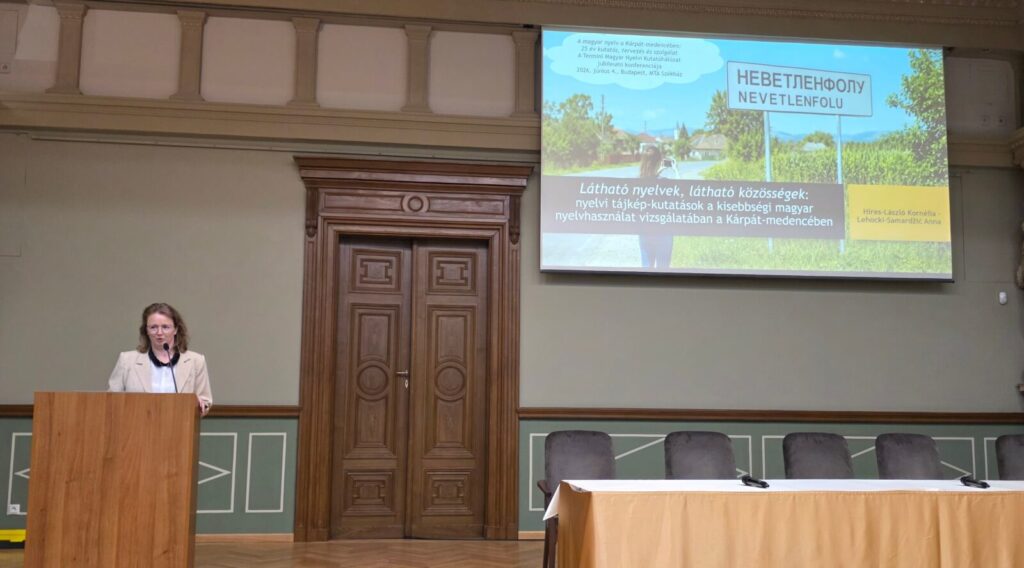
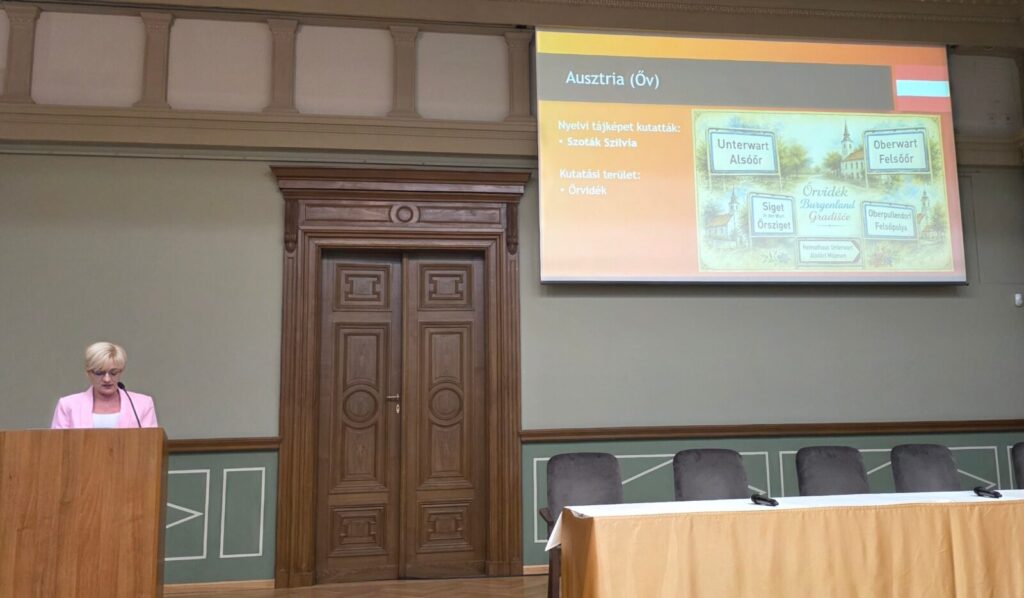
The plenary lectures were moderated by Krisztián Váradi, researcher at the Antal Hodinka Research Centre for Linguistics. The professional programme also included presentations by researchers affiliated with the Antal Hodinka Research Centre for Linguistics. Kornélia Hires-László and Anna Lehoczki-Samardžić delivered a joint presentation entitled “Visible Languages, Visible Communities: Linguistic Landscape Research in the Carpathian Basin,” in which they presented the possibilities and significance of linguistic landscape research. Other presentations included a lecture by Attila Benő and Katalin P. Márkus on the applicability of the Termini Hungarian–Hungarian dictionary, as well as a presentation by Éva Vukov Raffai and Veronika Dančo Jakab on issues of Hungarian educational terminology in Hungary and beyond its borders.
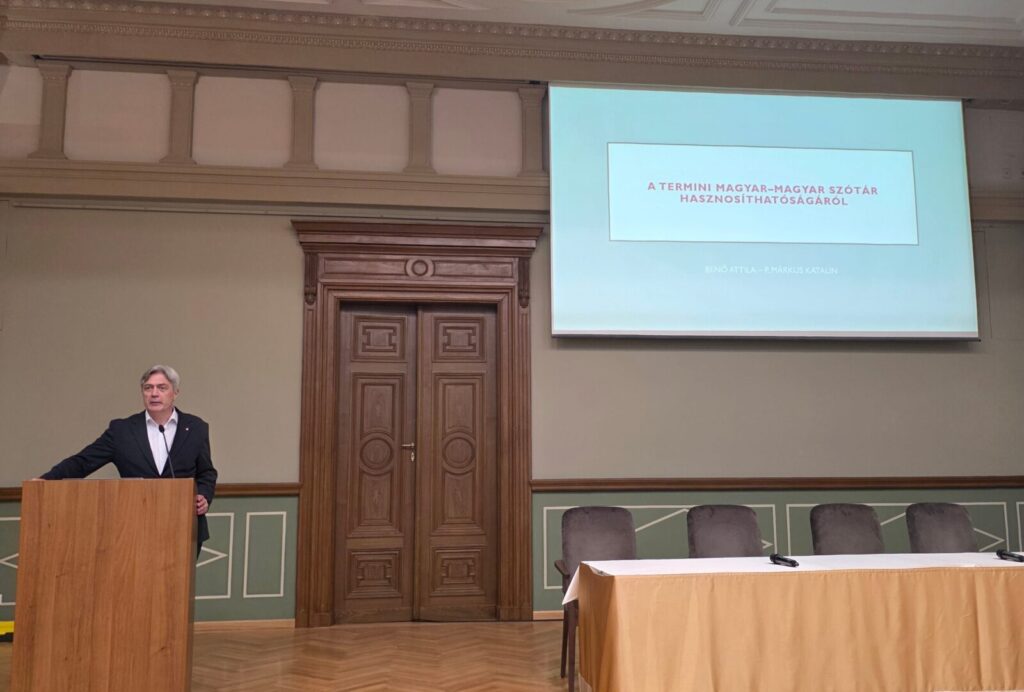
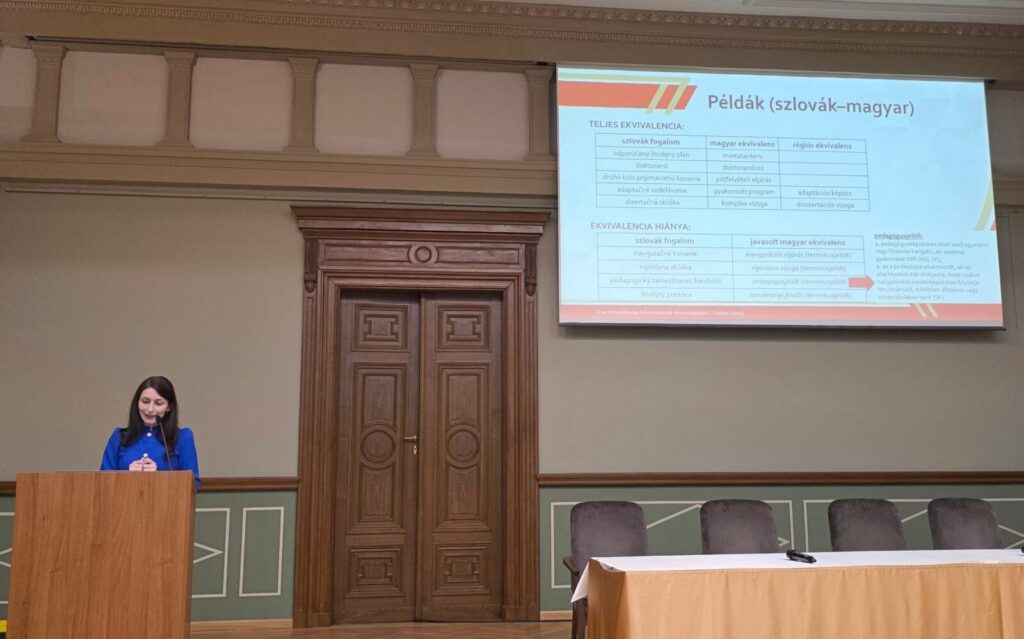
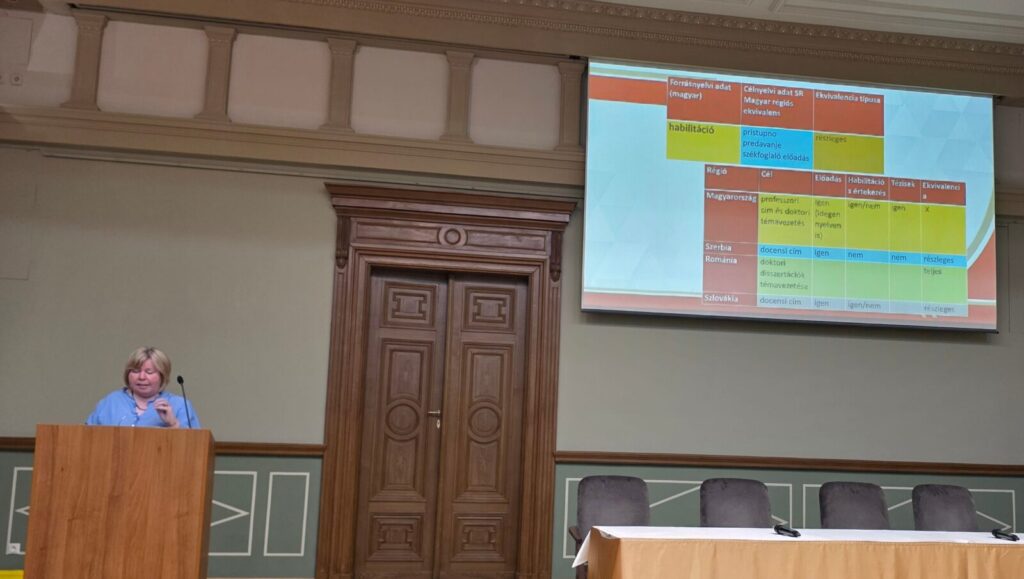
The conference programme was complemented by a roundtable discussion with the participation of the language offices. The discussion focused on support policy, science policy, and possible ways of addressing the linguistic problems of minority communities.
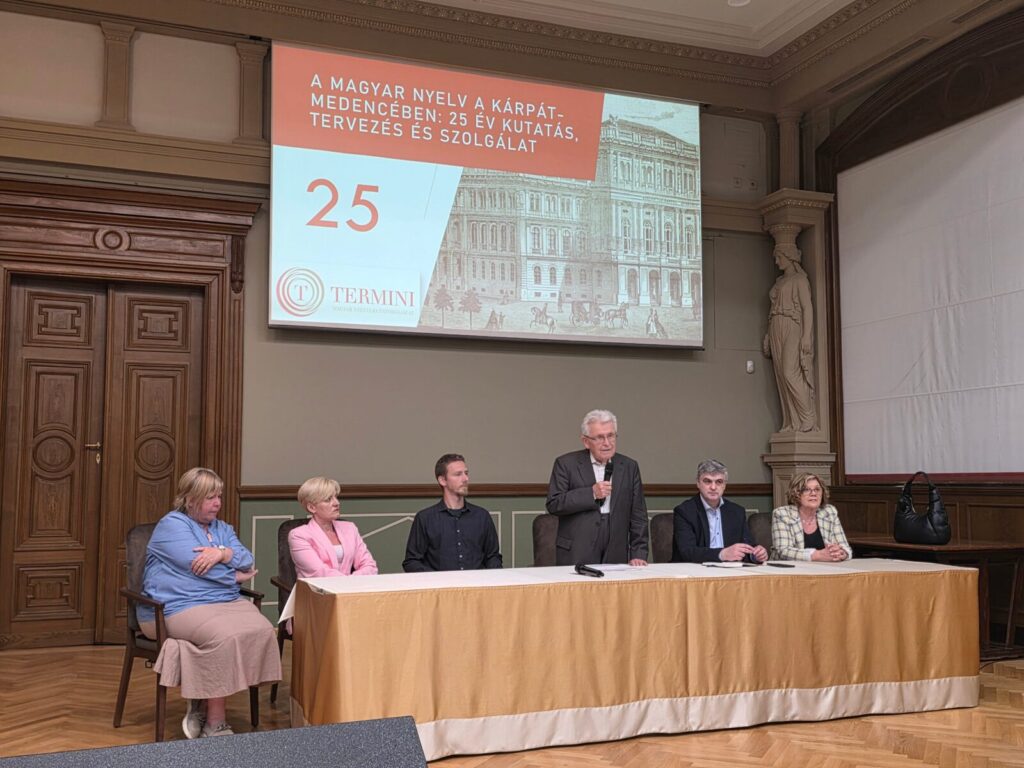
The event also included the presentation of the Szabó T. Attila Award. The award, which has a ten-year history, was presented on behalf of the Termini Hungarian Language Research Network by János Péntek, and on behalf of the Society of Hungarian Linguistics by Professor Dezső Juhász.
The event was made especially significant by the fact that this year marks the 120th anniversary of the birth of Szabó T. Attila, as well as the 25th anniversary of the foundation of the Termini Hungarian Language Research Network and the Szabó T. Attila Linguistic Institute.
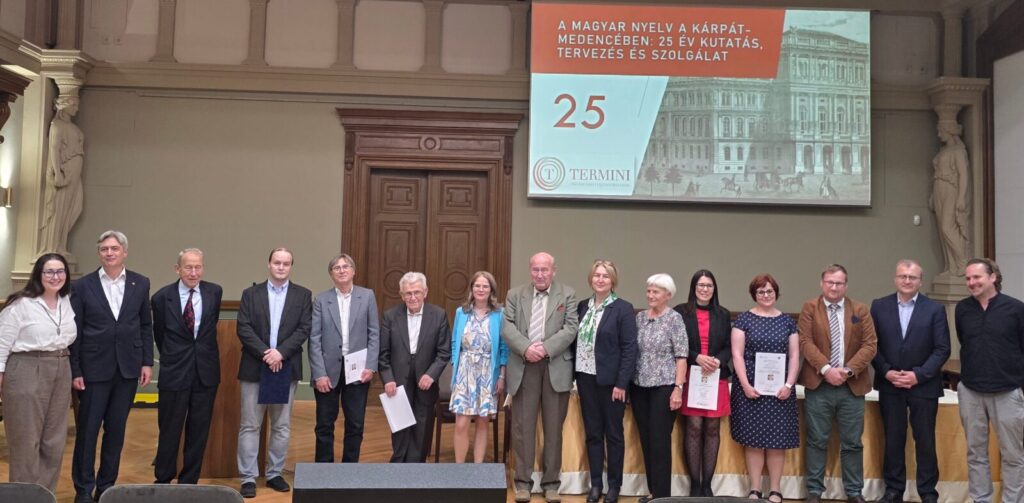
The “Hungarian Language in Science – Szabó T. Attila Award” was established in 2016 to recognise professionals who consider the refined use and development of Hungarian as a language of science to be important, and whose work contributes to the dissemination and continuation of the scholarly legacy of Szabó T. Attila. This year, the circle of awardees was expanded by two Transylvanian researchers, Dr Zsolt Nagy and Dr Borbála Zsemlyei.
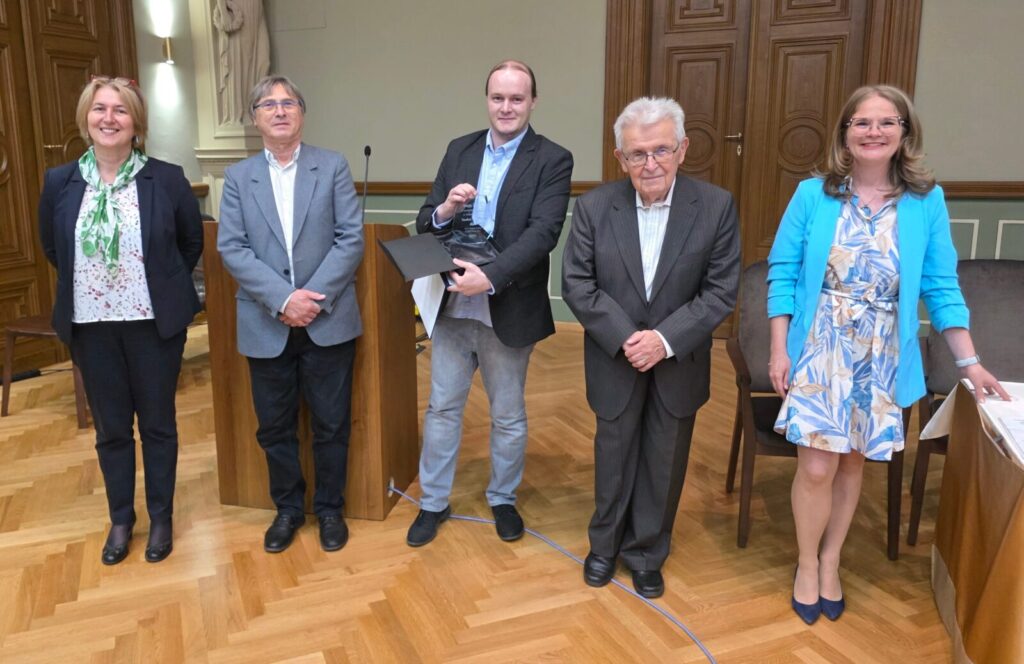
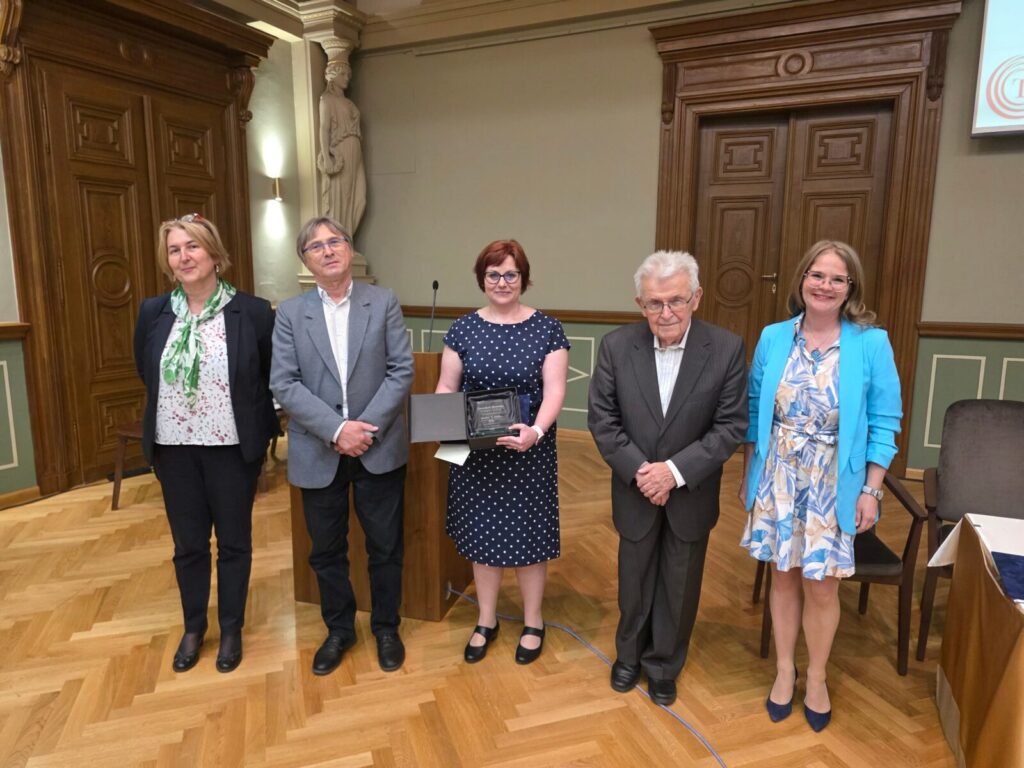
The jubilee conference provided a worthy occasion to present the results of research on the Hungarian language in the Carpathian Basin, the role of the Termini Research Network in connecting regions, and current issues concerning the linguistic situation of Hungarian minority communities.